
A café drink can look deceptively simple. A small amount of ground coffee, some water, perhaps milk, and a cup. If the ingredients seem so basic, why can the final drink cost several dollars?
The answer is that the menu price doesn't cover the coffee dose alone. It supports two connected systems: the supply chain that grows and moves coffee from origin, and the local business that roasts, prepares, and serves it.
It is also misleading to look at a café price and assume that a fixed percentage went to the farmer. The price paid at the farm and the price paid at the counter belong to different transactions. Each one includes different work, costs, risks, and margins.
In short, coffee prices pay for farm labor and inputs, processing, milling, quality control, financing, export, freight, importing, roasting, packaging, distribution, and retail operations. A prepared drink also pays for barista labor, rent, equipment, utilities, ingredients, waste, taxes, and the margin needed to keep the business operating. A higher consumer price can create room for better producer payment, but it does not prove that the producer received more.
Understanding the economics begins with one important distinction: there is no single coffee price.
One Product, Several Different Coffee Prices
Coffee changes form as it moves through the supply chain. It can be sold as fresh cherry, dried parchment, export-ready green coffee, roasted coffee, or a prepared drink. Comparing these prices as if they measured the same thing creates a distorted picture.
Price point | What it generally measures | What it does not show |
| Farmgate price | Payment made at or near the farm for coffee in a specified form | The producer's income after labor and production costs |
| FOB price | The value of export-ready green coffee delivered to the port of origin | The amount received by an individual farmer or the cost of overseas freight |
| Landed green-coffee cost | The cost of bringing green coffee into the consuming market | Roasting, packaging, fulfillment, or retail expenses |
| Roasted retail price | The price of a finished bag sold to a customer | A direct measure of producer compensation |
| Café menu price | The price of coffee plus preparation, service, and local operating costs | The value of the coffee beans alone |
Each figure answers a different question. Even the farmgate price needs context. Was the producer paid for fresh cherry, parchment, or dried green coffee? Did the producer complete the processing? Were cooperative fees or transport costs deducted? A price per pound means little until the form, unit, quality, and included services are clear.
FOB means “free on board.” According to the Specialty Coffee Transaction Guide, an FOB price covers coffee delivered and placed on the ship at the port of origin. It may include inland transport from a mill or warehouse, but it does not include ocean freight, insurance, customs, or destination transport. By the time coffee reaches the FOB stage, several origin-side services may already be included in the price. That is why FOB should never be presented as the farmer's take-home income.
Market benchmarks create another layer of confusion. The Coffee C contract is a global benchmark for exchange-grade Arabica green coffee, while the International Coffee Organization Composite Indicator Price is another widely used reference. Neither is the retail price of a roasted bag or prepared drink.
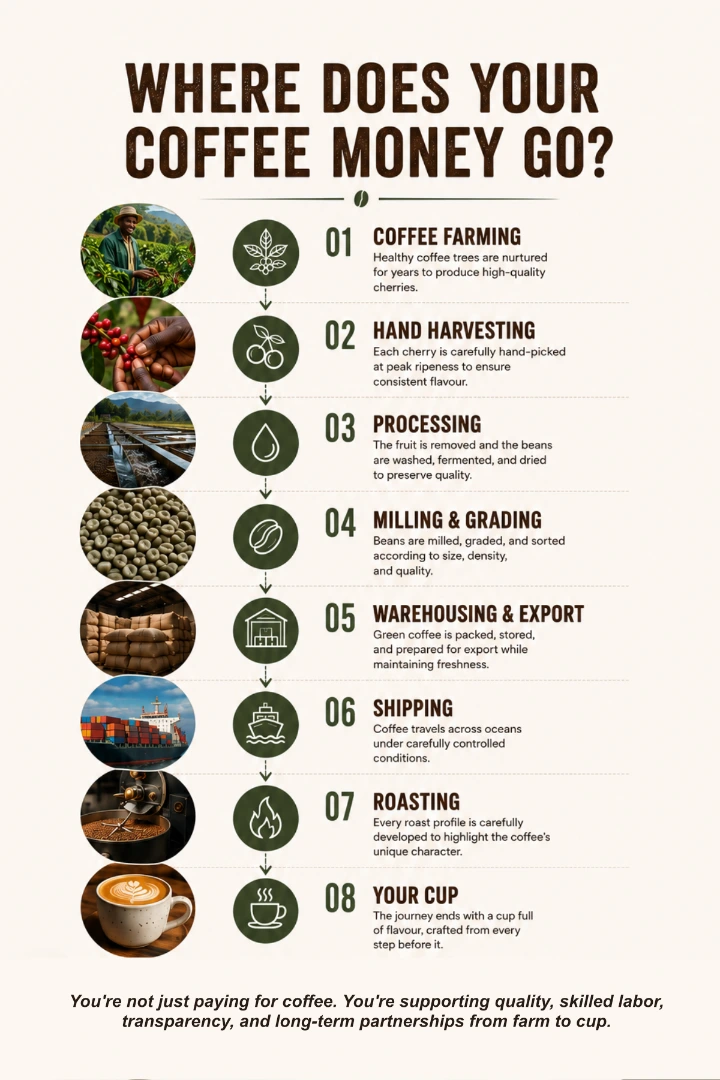
This illustration shows the work involved across the supply chain. It does not represent a fixed percentage breakdown of the final coffee price.
What the Price Must Cover at the Farm
The economic story begins long before harvest. Coffee trees require land, seedlings, soil care, pruning, water management, pest and disease control, and years of attention. Farmers make these investments before they know the final size, quality, or price of a crop.
Harvest adds labor, processing, equipment, storage, and transport costs. Ripe coffee may need several selective picking passes because cherries on the same tree do not always mature together. Weather, pests, disease, market prices, and exchange rates add risk throughout the season.
One of the least visible costs is family labor. On many small farms, relatives contribute to fieldwork, harvesting, processing, or administration without receiving a formal wage. If that labor is excluded from the calculation, a farm can appear profitable even when the household is not earning enough to sustain itself.
Research discussed by the Specialty Coffee Association found that family labor was frequently undervalued and that value and profit were distributed differently across the supply chain. Its model covered selected products and countries, so it should not be turned into a universal percentage. The broader lesson is that farm revenue is not producer income.
To understand what a farmer earned, we need to know what the farmer was paid, what costs the farmer carried, how much labor the household contributed, and what remained after those costs.
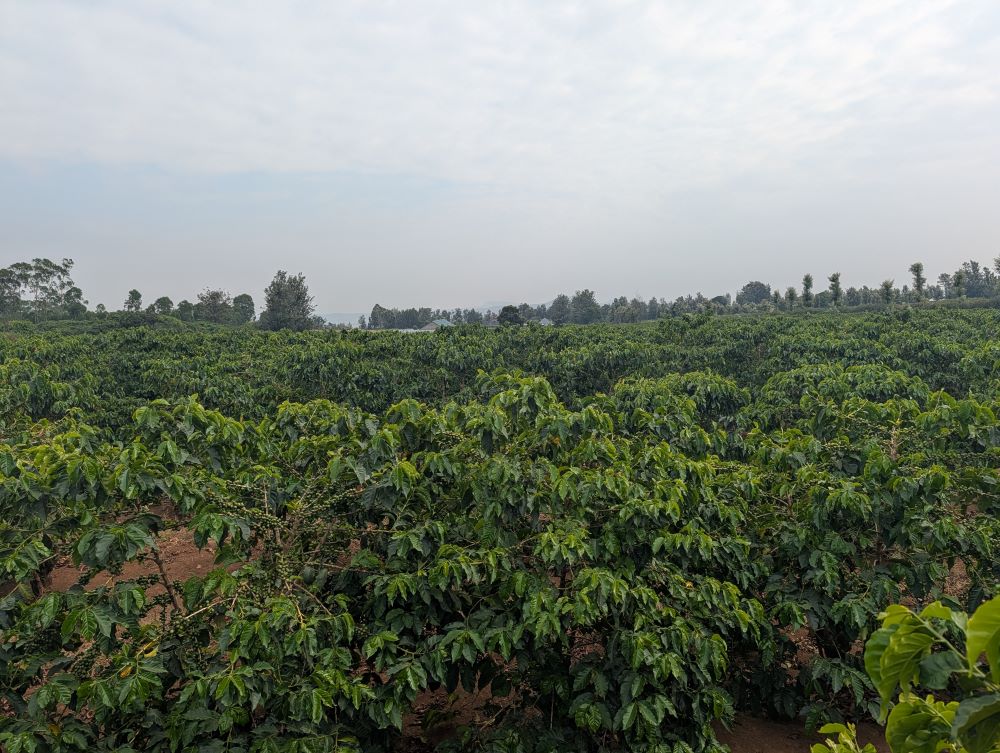
Coffee production costs begin long before harvest with land management, plant care, labor, inputs, and crop risk.
What Happens Between the Farm and the Roaster
Coffee does not leave a farm ready to enter a roaster. It may need to be collected, milled, graded, sorted, sampled, stored, bagged, documented, and transported to a port. After export come ocean freight, insurance, import charges, warehousing, financing, and inland transport.
These services require people, equipment, capital, and expertise. Describing every intermediary as an unnecessary middleman misses the work involved. Shorter supply chains can improve communication, traceability, and bargaining power, but they do not eliminate milling, quality control, transport, finance, or regulatory compliance.
The better questions are: What function does each participant perform? What does that function cost? Who has access to price and quality information? Who carries the risk when something goes wrong?
A margin at one stage is not automatically pure profit. The business receiving that margin may still need to pay staff, storage, finance, insurance, losses, and overhead from it.
For readers who want to follow the physical movement in more detail, Solai Coffee's guide to how the coffee supply chain works explains the steps from production to consumption.
What the Price of a Roasted Bag Pays For
Once green coffee reaches a roaster, it still has to become a finished product.
The roaster pays for green coffee and may finance inventory before selling a single bag. Roasting then requires trained staff, energy, machinery, ventilation, maintenance, production space, test batches, and quality control.
Coffee also loses weight during roasting as moisture and other compounds leave the bean. A pound of green coffee does not become a pound of roasted coffee. This makes a direct comparison between the green price per pound and the roasted retail price misleading even before labor, packaging, and overhead are considered.
The finished coffee also needs protective packaging, labels, cartons, storage, fulfillment, shipping materials, and customer support. The business must cover payment fees, insurance, taxes, overhead, and coffee lost through testing, damage, or age.Scale, quality, origin, packaging, sales channel, and inventory turnover all affect the cost structure. Green coffee remains only one part of the final retail price.
For a closer look at the quality side of this equation, read why specialty coffee costs more.
Why a Café Cup Is Also a Hospitality Purchase
A prepared drink adds a second business model on top of the coffee supply chain. The café is not simply reselling beans by the gram. It is providing preparation, equipment, space, speed, and service.
A roasted bag pays for | A prepared café drink also pays for |
| Green coffee and inventory finance | Barista wages and payroll costs |
| Roasting, testing, and quality control | Training and preparation time |
| Packaging and labeling | Milk, water, syrups, and other ingredients |
| Storage and order fulfillment | Rent, utilities, insurance, and cleaning |
| Business overhead and operating margin | Espresso machines, grinders, refrigeration, and repairs |
| Cups, lids, napkins, remakes, and waste |
A café must also cover quiet hours when staff, rent, and equipment still cost money.
This is why a universal pie chart for “the cost of a cup” is unreliable. A bag shipped from a roastery has a different cost structure from a latte served in a city-center café. Rent, wages, drink size, customer volume, and local taxes vary even when two businesses use the same coffee.
Why a Higher Retail Price Does Not Automatically Mean the Farmer Earned More
A higher menu or bag price can create room for better producer compensation, but it doesn't show where the extra money went.
A retailer may raise prices because wages, rent, freight, packaging, insurance, or finance costs increased. The coffee may have been purchased months earlier, while currency changes can affect import costs without changing the farmgate payment.
Green coffee prices are not uniform either. The Specialty Coffee Transaction Guide shows that specialty pricing can vary with quality, lot size, producing region, and country. Certifications, contract terms, buyer relationships, available volume, and negotiation also shape the final agreement.
This is where four words are often confused:
- Price is what one party pays another at a specific point in a transaction.
- Cost is what a participant spends to perform work or absorb risk.
- Value is what a participant contributes or what a buyer recognizes as worth paying for.
- Income or profit is what remains after the relevant costs are deducted.
Even certification language requires care. Fairtrade distinguishes its minimum price, a market safety net, from a living-income reference price. Fairtrade International explains that they are not interchangeable measures.
The same caution applies to specialty coffee. A premium retail position does not guarantee better outcomes for farmers. To examine that question more closely, read whether specialty coffee actually helps farmers.
What Meaningful Coffee Price Transparency Looks Like
Transparency becomes useful when it names the transaction and explains the surrounding costs. A number without context can create the appearance of openness while leaving the most important questions unanswered.
When a company publishes a coffee price or sourcing claim, ask:
- Is this a farmgate, parchment, FOB, landed, wholesale, or retail price?
- What unit, grade, process, quality level, and crop period does it cover?
- Does the figure include cooperative, milling, export, certification, or logistics costs?
- Who received the payment?
- What production costs did the farmer retain?
- Was the price a one-time premium or part of a repeat purchasing relationship?
- Who carried the risks of quality, finance, currency, inventory, and crop loss?
These questions do not make coffee pricing simple. They make the conversation more honest.
From One-Time Payment to Recurring Participation: REPChain
Most coffee price discussions focus on the amount paid when green coffee changes hands. Joe Coffee's REPChain presents a different idea: producers can also participate in value created later, when coffee is sold further downstream.
Joe Coffee describes REPChain as technology designed by Bartholomew Jones Cxffeeblack and integrated into Joe's platform. The model is intended to route a percentage of participating coffee sales back to producing farmers as automated, recurring royalty income. Instead of treating the producer's contribution as complete after the original coffee purchase, it connects producer compensation to later commercial activity.
That does not make the original farm or green-coffee price less important. A royalty should be assessed alongside the initial payment, not used to excuse an inadequate one. Meaningful evaluation also requires clear answers: Which producers qualify? What percentage is routed? Which sale triggers the royalty? Are administrative costs deducted? Can producers verify transactions and payments? Is the royalty additional to the agreed purchase price?
REPChain matters to this conversation because it expands transparency beyond disclosing a single historical price. It asks whether producers can continue participating in the value their work helps create.
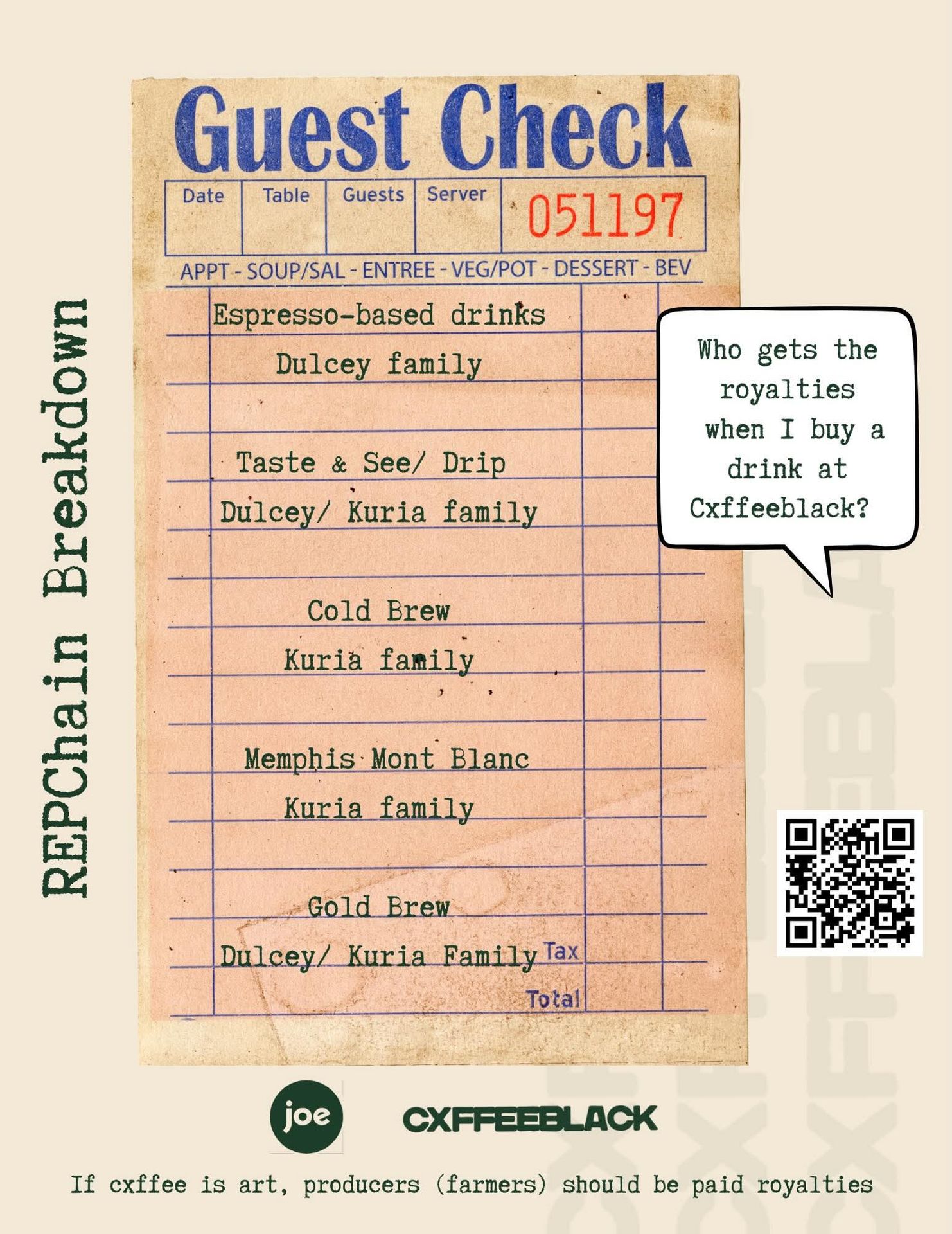
REPChain provides an example of how participating coffee transactions can create recurring royalty payments for identified producer families.
How to Decide Whether a Coffee Price Represents Good Value
Consumers do not need a company's full accounts to make a thoughtful choice. They need enough information to compare similar products. Start with bag weight, expected servings, origin, grade, processing, roast date, freshness, and sales channel.
Next, look for concrete sourcing information. Does the company name the origin, farm, cooperative, or producer relationship? Does it explain what “direct,” “ethical,” or “transparent” means in practice? Does it separate a price paid at origin from the final retail price?
Consider the complete value being offered. For a bag, that may include quality, freshness, traceability, packaging, and delivery. For a café drink, it also includes preparation, service, equipment, and space.
The most useful question is not simply, “Why is this coffee expensive?” It is, “What work, quality, and relationships does this price support?”
A Price Is a Map of Choices
The final price of coffee reflects agricultural work, processing, trade, logistics, roasting, packaging, and sometimes hospitality. Understanding those layers helps us avoid assuming that the beans are the only meaningful café cost or that a premium consumer price automatically produces a premium farmer income.
Real transparency starts by naming which price we mean, what work it includes, and who carried the costs and risks behind it. From there, consumers can evaluate coffee on more than price alone. They can look for quality, specificity, traceability, and relationships that are visible enough to examine.
Explore Solai Coffee's farm-direct Kenyan coffee and learn more about the people, places, and work behind each bag.