
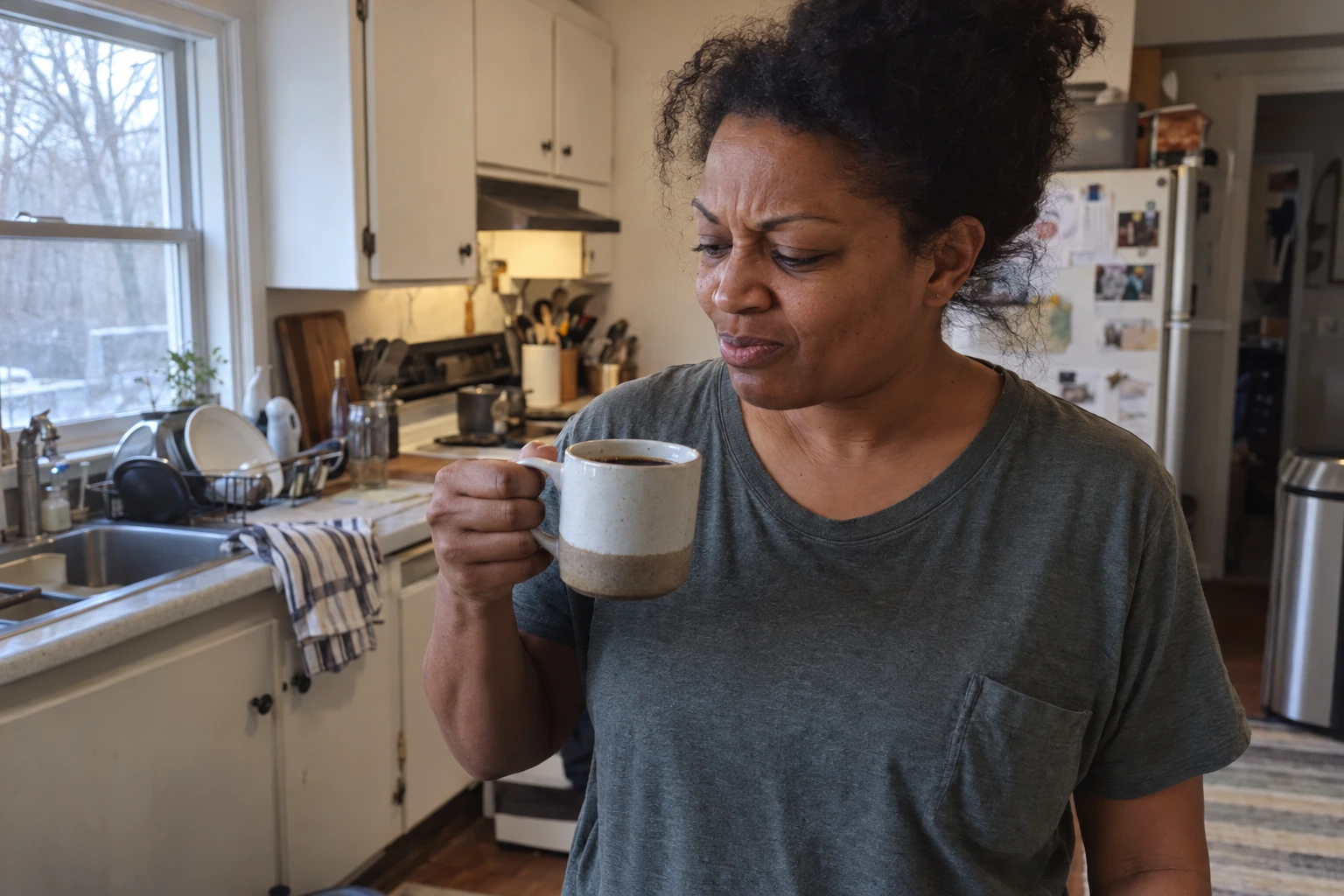
You have measured the coffee, heated the water, and followed the recipe. Yet the first sip tastes sharp and unfinished. Instead of the sweetness you expected, a sourness seems to dominate the cup.
Coffee can taste sour when the brew is under-extracted, when extraction is uneven, or when the coffee's natural acidity is stronger than you enjoy. A coarse grind, short brewing time, or water that is too cool for your recipe can contribute. The best fix depends on what else you notice, including the strength, texture, and flow of the brew.
For a hot filter coffee that tastes thin and sharply sour, start by grinding slightly finer while keeping the dose and water amount unchanged. Taste again before changing anything else. If the coffee is already draining very slowly, however, do not keep grinding finer. Check for clogging or uneven wetting first.
Sour Coffee or Pleasant Acidity?
Coffee can have acidity you enjoy. A bright cup might remind you of citrus, apple, or berries while still tasting sweet and balanced. Those qualities can make a particular bag interesting.
Unpleasant sourness feels different in context. The sharpness dominates, the cup may seem thin or unfinished, and little sweetness balances it.
These descriptions are useful tasting clues, not chemical tests. Your preferences also matter. A balanced cup can still be brighter than you like.
Research discussed by the Specialty Coffee Association shows that brewing the same coffee at different strengths and extraction levels changes perceived sourness. In those drip-brewing experiments, more concentrated brews with lower extraction tasted most sour. The study also found that consumers have different acidity preferences.
The practical lesson is that both the coffee and the way you brew it deserve attention. Sourness alone does not prove that the beans are bad.
A Quick Guide to Fixing Sour Coffee
Use the combination of taste and brewing behavior to choose your first adjustment.
| What you notice | What may be happening | What to try next |
| Thin, sour filter coffee that drains unusually quickly | Insufficient extraction from a coarse grind | Grind a little finer |
| Sour French press coffee after a short steep | Too little contact time | Extend the steep while keeping other settings unchanged |
| Sour coffee from a brewer that is not fully warmed | The brewing setup may be losing too much heat | Preheat and follow the equipment's warm-up guidance |
| Sour pour-over that stalls or drains unevenly | Clogging or uneven extraction | Check grind consistency and pouring before going finer |
| Strong, sharply sour espresso with a short beverage yield | The recipe may need more extraction | Try a slightly longer yield at the same dose and grind |
| Bright but otherwise balanced coffee | The flavor profile may not suit your preferences | Try a different roast or flavor profile |
| Sourness that appears only after adding milk | The added ingredient may be the source | Check the milk before changing your coffee recipe |
These are starting points. Make one change per brew so you can tell whether it helped.
Common Reasons Your Coffee Tastes Sour
1. The Grind Is Too Coarse for the Recipe
A coarse grind can leave a hot filter brew tasting underdeveloped, particularly when the water runs through quickly.
Barista Hustle explains that channeling happens when easy routes through or around the bed let water bypass some of the coffee. If the cup tastes thin and sour and the flow is faster than usual, grind one small step finer. Keep the dose, water quantity, pouring routine, and temperature the same.
Our coffee grind size guide explains how to choose a starting grind for your brewing method.
2. Brewing Time Is Too Short
In a French press or another immersion brewer, water needs enough time in contact with the grounds for the recipe to develop. If you usually press after two minutes, try a four-minute steep with the same dose and grind—taste before making another adjustment.
For pour-over, brew time depends on the grind, filter, dose, and pouring pattern. A fast brew can be a clue, but forcing every dripper to finish at the same minute is unlikely to solve every problem.
Use taste and flow together. A cup that finishes quickly but tastes good does not need correcting.
3. The Water or Brewing Setup Is Too Cool
Hot brewing temperature affects how quickly extraction takes place. A cold dripper, an unheated espresso machine, or a kettle left standing for a long time can change the conditions you intended to use.
For manual hot filter brewing, try a starting range around198–205°F, then adjust for the coffee and your preferences. This is a practical range to explore, rather than a requirement for every brewing method.
Preheat the brewer where appropriate. For espresso and automatic drip equipment, follow the manufacturer's operating and warm-up instructions.
The SCA's temperature research explains that temperature works alongside grind and brew time to influence extraction and strength. Hotter water is one tool, rather than a guaranteed cure for sourness.
For more detail, read our guide to how water temperature affects coffee brewing.
4. Water Is Not Reaching the Grounds Evenly
A coffee bed can extract unevenly when some areas receive much more water than others.
In pour-over brewing, start with a level bed, wet all the grounds during the bloom, and pour in a controlled way. Avoid repeatedly digging into one spot with an aggressive stream.
Barista Hustle's explanation of channeling describes how easy routes through or around the bed can allow water to bypass some of the coffee. If the brew stalls, a finer grind may make the problem worse. Check your filter placement, pouring routine, and grind consistency. A slightly coarser grind may be worth testing.
For espresso, use an appropriate dose for the basket, distribute the grounds evenly, and tamp level. Do not judge the entire extraction from the appearance of the spent puck alone.
5. The Coffee and Water Quantities Need Attention
Strength and extraction are related, but they describe different things. Strength tells you how concentrated the drink is. Extraction describes how much material water has removed from the grounds.
That is why adding more coffee to a sour brew is not an automatic fix.
For hot filter brewing, start around 1:16 to 1:17 by weight. For example, use 0.53 ounces of coffee with 1 cup (8 to 8.5 fluid ounces) of water. Keep that ratio steady as you adjust the grind and brewing routine.
If a cup tastes balanced but too intense, try adding a little hot water to a small sample. Dilution reduces intensity, but it doesn't extract anything more from the grounds. If the coffee tastes both weak and sour, address extraction before simply increasing the dose.
6. You Prefer a Different Flavor Profile
A light roast with a bright flavor profile can remain lively even when brewed well. You do not have to remove every trace of acidity to make a successful cup.
If the coffee has sweetness, a satisfying texture, and a balanced finish but still feels too bright, try a bag with a different roast level or tasting description. Chocolate, caramel, or nut descriptors may provide a useful direction to explore, though tasting notes are not guarantees.
Water is another variable worth checking if several bags taste unexpectedly sharp in your home setup. Try a different suitable brewing water while keeping the recipe fixed. For espresso machines, stay within the manufacturer's water specifications. La Marzocco's water guidance explains why removing too many minerals can create brewing and equipment problems.
How to Fix Sour Coffee by Brewing Method
Pour-Over
Start by noting how the brew flowed. If it ran through unusually quickly and tasted thin, grind slightly finer.
If it drained slowly or unevenly, inspect the pouring routine and filter instead. Wet the bed evenly, avoid excessive stirring, and change only one part of your routine at a time.
Use our Kenyan coffee brewing guide for a measured starting recipe.
Automatic Drip Coffee
Check that your batch size falls within the machine's intended range. Spread the grounds evenly in the basket and use the appropriate batch setting if available.
Try a slightly finer grind if the coffee tastes thin and sour, but stop if the basket begins draining poorly. Clean and descale according to the manufacturer's instructions.
French Press
Check the steep time and whether all the grounds became wet. Extend the steep time very slightly before making several other changes.
If a four-minute brew still tastes thin and sour, test a slightly finer grind on the next batch. Pour carefully if you notice increased sediment.
Espresso
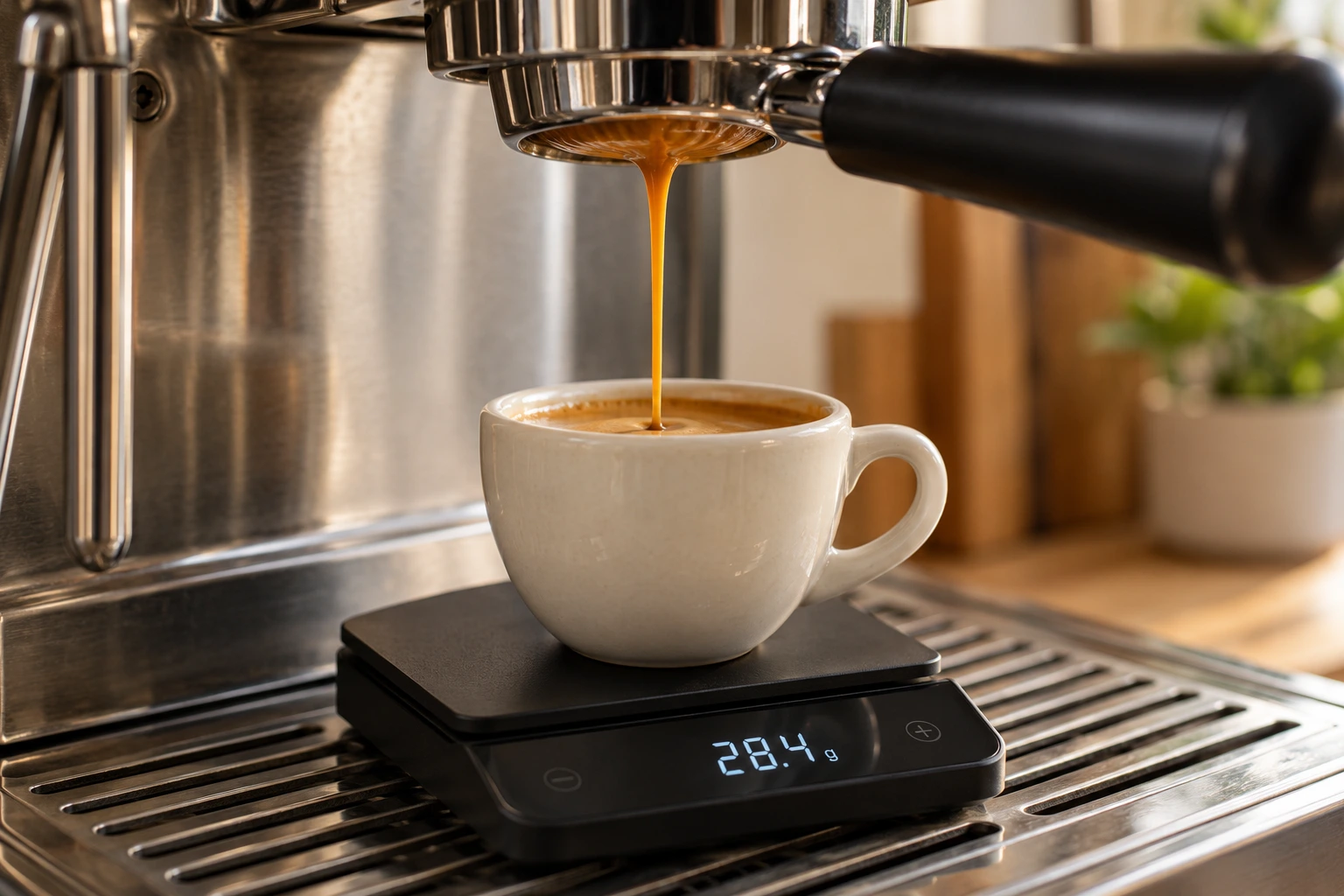
Weigh the dose and beverage yield rather than relying on shot time alone. La Marzocco's brew-ratio guide guide gives 0.63 ounces of ground coffee and a 1.25-fluid-ounce shot (double shot) of espresso as a 1:2 starting ratio.
If the shot runs very quickly and tastes sharply sour, check preparation and try a slightly finer grind. If flow is reasonable but the short shot remains sour, test a slightly longer yield at the same dose and grind.
For example, compare a 0.63-ounce dose producing a 1.25-fluid-ounce shot of espresso with the same dose producing a 1.4-fluid-ounce shot. This is a tasting exercise, not a universal target. Stop extending the yield if the result becomes unpleasantly thin, bitter, or drying.
Try a Simple Comparison at Home
Choose a manual filter recipe you can repeat. Record the coffee, water quantity, temperature, grind setting, and total brewing time.
Brew one cup at your current setting. Make a second using a slightly finer grind, keeping the other inputs and your pouring routine unchanged. Allow both cups to cool to a comfortable drinking temperature before comparing them.
Look for changes in sweetness, sharpness, body, and finish. The finer grind may help, or it may slow the brewer enough to introduce another problem. Either result gives you more useful information than changing every setting at once.
This is an exercise for your own brewing setup. It is not a report of a product test conducted by Solai Coffee.
Frequently Asked Questions
- Does sour coffee mean the beans have gone bad?
A sour taste alone can't confirm that. Brewing and the coffee's flavor profile may explain it. If the unpleasant taste appears only after adding milk or another ingredient, check that ingredient separately.
- Is sour coffee the same as bitter coffee?
No. Sourness can suggest tart fruit or a sharp tang, while bitterness may suggest dark cocoa or a lingering bitter edge. Both can occur together, so one label may not explain the whole cup.
- Can I fix coffee that is already brewed?
A little hot water may help a drink that is too concentrated. Milk or a sweetener may make it more enjoyable if that suits your preferences. These changes do not correct the extraction that already occurred.
- Is Kenyan coffee supposed to taste sour?
Kenyan coffee may have a bright, fruit-forward character, but it doesn't need to taste sour. Use a measured recipe and look for a balance you enjoy. For the broader flavor explanation, read our coffee acidity guide.
Make the Next Cup More Balanced
Start with the easiest clue to verify: how the brew flowed, how long it steeped, or whether the equipment was warmed. Keep your measurements steady and test one adjustment at a time.
Once you find a recipe you enjoy, save it as a reference for that bag. If you are ready to explore a different flavor profile, browse Solai Coffee's roasted coffee and use the roast and tasting information to guide your choice.