
Cafés on the Front Line of Climate Action
Small cafés are more than places to grab a latte; they’re community anchors, conversation starters, and trendsetters in the coffee world. Yet behind every comforting cup lies a measurable environmental footprint. With climate change accelerating and eco-conscious customers becoming the norm, independent coffee shops have a unique opportunity to lead on sustainability.
So, what does true climate-friendly coffee service look like? This article, contributed by Coffset, a platform dedicated to empowering individuals to understand and offset their carbon footprint, breaks down practical ways to measure and reduce your café’s carbon footprint—without getting lost in complexity. Along the way, it explores inspiring examples, actionable tips, and the deep connections between coffee, community, and climate action.
Why Small Cafés Matter in the Climate Conversation

While global headlines focus on big industry, the world’s coffee shops and small cafés have immense cumulative influence. In countries like the U.S. and UK, tens of thousands of independent shops serve millions every day. Each has a measurable carbon footprint, and collectively, they shape supply chains, local economies, and the everyday habits of their neighbors.
Why your café’s impact counts
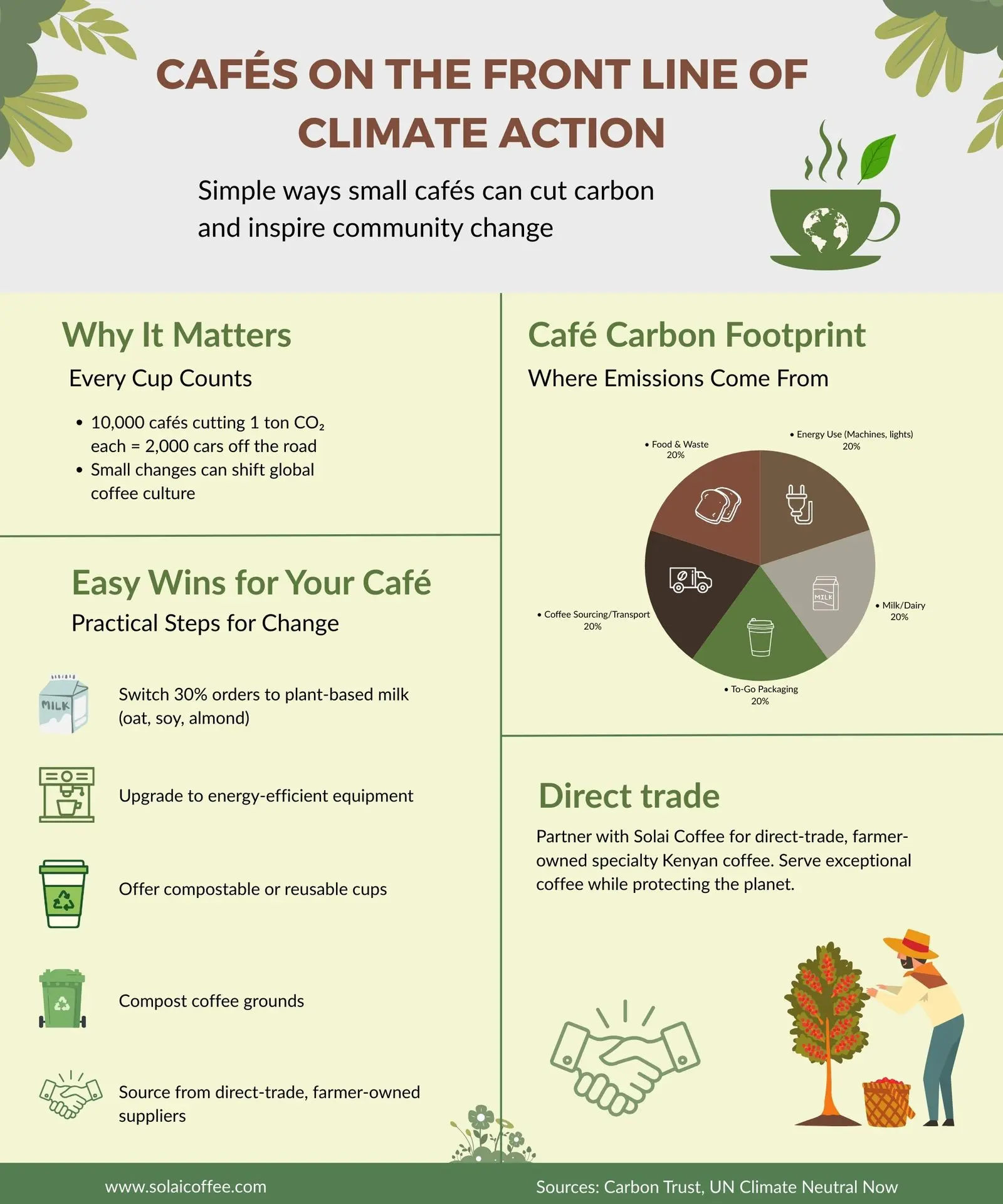
- Every kilogram of carbon matters: If 10,000 cafés each cut just 1 ton of CO₂ annually, that’s the equivalent of removing more than 2,000 cars from the road.
- Trendsetters: Small shops drive culture and accelerate sustainable coffee trends, think of the plant-based milk boom or reusable cup campaigns that started at the indie café level.
- Community hubs: Cafés spark local action days, education, and sustainable supply partnerships. They’re uniquely placed to foster optimism and action.
Carbon Footprint 101: Where Do Café Emissions Come From?
The environmental impact of a coffee shop is shaped by several interconnected factors, most of which can be tackled with practical action:
Energy Usage: Brewing coffee machines such as espresso, grinders, refrigeration, and lighting are energy-intensive, especially when powered by fossil-fuel-based grids.
Milk and Dairy: Dairy production is carbon-heavy; in latte-focused cafés, milk can account for up to two-thirds of drink-related emissions.
To-Go Packaging and Waste: Single-use cups, lids, and wrappers contribute to waste and emissions.
Coffee Sourcing and Logistics: How coffee is grown, processed, and transported—especially air freight—affects its footprint.
Food and Beverage Waste: Unsold pastries, coffee grounds, and excess water use all contribute to emissions.
Solai Coffee: A Model For Direct, Sustainable Sourcing
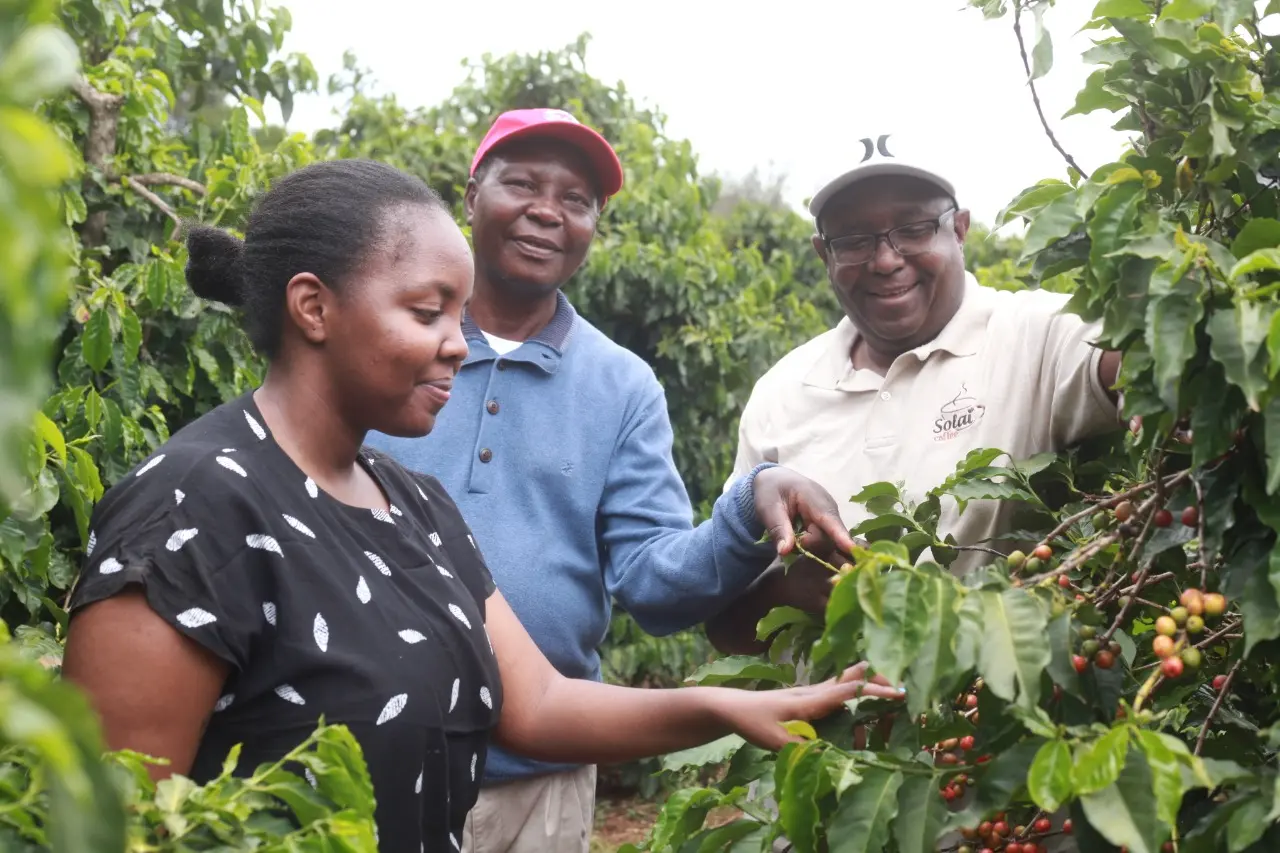
As cafés work to reduce their environmental impact, finding the right coffee partner can make all the difference. Solai Coffee, for example, is a farmer-owned specialty producer based in Orlando, Florida, with deep roots in Kenya. Through direct trade, they connect cafés and consumers with the farmers who grow their beans, ensuring fair value, stronger communities, and a transparent supply chain from crop to cup.
Partnering Solai Coffee means serving exceptional coffee while supporting people, protecting the planet, and ethical coffee sourcing.
How Small Cafés Can Measure Their Carbon Footprint (The Simple Way)
A carbon footprint is simply a tally of all the greenhouse gases (GHGs) emitted by your café’s activities, measured in CO₂-equivalent units.
Step 1
Gather Your Data – Track energy use, milk and dairy quantities, coffee bean purchases, packaging waste, and disposal methods.
Step 2
Use Sector-Specific Carbon Calculators – Tools like Carbon Trust’s Footprinting Guide or UN Climate Neutral Now make it easy.
Step 3
Identify Your Hotspots – Electricity, dairy, and packaging are common emission sources.
Step 4
Set and Track Targets – Switch 30% of orders to plant-based milk, reduce energy use by 10%, or eliminate single-use plastic by a set date.
Read More: Best Milk Alternatives for Coffee
Practical Strategies: Carbon Footprint Café Strategies
Making meaningful change needn’t be complicated. Draw inspiration from industry leaders and align your choices with your café’s brand and customers.
- Choose direct and transparent: Source from suppliers like Solai Coffee, who offer farmer-owned, single-origin beans with clear trade relationships and documented social impact.
- Prioritize sustainable and ethical certifications, such as Fairtrade, Rainforest Alliance, and organic certifications, which signal better environmental and labor practices.
- Milk matters: Switch to plant-based milk for lower emissions, such as oat, soy, or almond milk, can more than halve beverage-related emissions.
- Upgrade equipment: Modern espresso machines and induction kettles are up to 70% more efficient, significantly reducing energy consumption.
- Switch to renewables: Investigate green power tariffs with your utility provider.
- Smart operations: Turn off energy-intensive equipment during lulls; use timer switches and maintain fridge/freezer seals for efficiency.
- Compostable options: If disposables are necessary, insist on compostable or recyclable types.
- Compost coffee grounds: Did you know you can use your used coffee grounds as manure for your garden and also keep mosquitoes away?
Café Stories: Inspiration From the Frontlines
Green Cup Café, based in Sydney, switched to oat milk as the default, incentivized reusable cups, and cut its beverage-related emissions by over 25% in a single year. Savings on milk and energy helped them invest in local community events and workshops.
The Little Roastery in London, with efficient equipment upgrades, a renewable energy contract, and collaboration with local bakers, lowered emissions and garnered a reputation as the city’s “conscious cup.”
Sunbeam Coffeehouse (Toronto) led staff to start weekly compost collections and partner with a nearby urban farm. The result? Less landfill waste, new community relationships, and a story customers love to share.
Ready to brew change in your café? Partner with Solai Coffee for direct trade, farmer-owned specialty Kenyan coffee that empowers communities and protects the planet.
About the Contributor
This article was contributed by Coffset, a platform dedicated to empowering individuals to understand and offset their personal carbon footprint. Coffset shares practical, planet-positive solutions for anyone looking to make a meaningful impact.