
When most people think about what shapes coffee's taste, they often think of roast level or brewing method. Some recognize the importance of origin, such as Kenya, Brazil, or Guatemala. However, few realize that the genetic variety of the coffee plant itself plays an equally important role.
Like grape varieties in wine, coffee varieties affect sweetness, acidity, aroma, body, and complexity. Even when grown in the same place and processed the same way, two coffees from different varieties can taste very different.
Learning about coffee varieties gives you a better understanding of specialty coffee. It explains why some beans are more expensive, why some farms have unique flavors, and why producers need to choose their plants carefully.
Coffee varieties serve as a bridge between agriculture, economics, and flavor. To see this connection in action, consider how coffee plants have evolved and spread around the world.
Key Insight
Most specialty coffee discussions focus on origin and processing. However, the genetic variety of the coffee plant can influence flavor just as much as altitude or fermentation method. Two coffees grown in identical environments can taste dramatically different simply because they come from different plant varieties.
Coffee Species and the Arabica Family
The genus Coffea includes more than 120 species of coffee plants, but only a few are commercially cultivated. The two most important species are Coffea arabica and Coffea canephora, commonly known as Robusta.
Arabica makes up most specialty coffee because it has a complex flavor and strong aroma. Robusta, on the other hand, is more bitter and has more caffeine, so it's often used in instant coffee or blends.
Read more about Types of Coffee Beans and What Sets them Apart?
Arabica coffee includes many different varieties, also called cultivars. Each one is a genetic group shaped by natural changes, selective breeding, and adapting to different growing conditions.
These varieties affect both how coffee tastes and how the plants grow. Some give higher yields but simpler flavors. Others have great cup quality but need more careful farming.
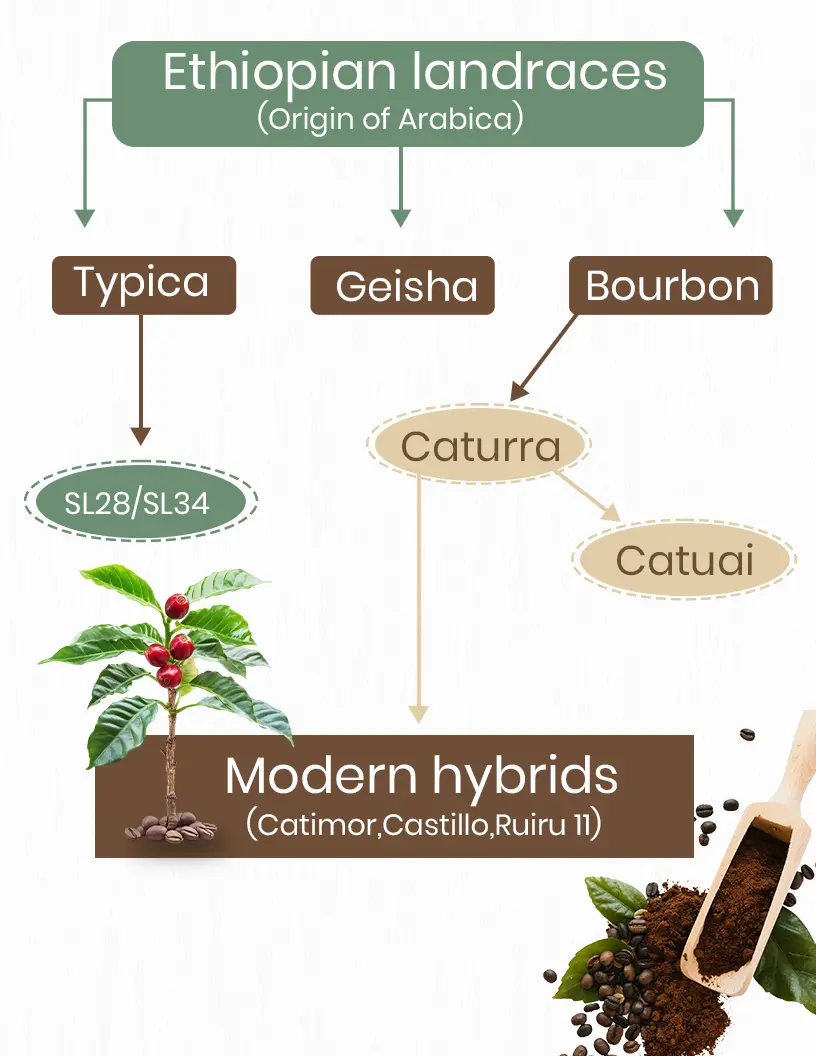
Coffee Variety vs. Cultivar: What’s the Difference?
People often use the terms variety and cultivar as if they mean the same thing, but in plant science, they have slightly different meanings. Each variety, whether natural or bred, has genetic traits that affect flavor, plant growth, and resilience.
Coffee Variety | A variety is usually a naturally occurring genetic subgroup within a species. Early Arabica types like Typica and Bourbon occurred through natural mutations and adaptation as coffee spread around the world. |
Cultivated Cultivar | A cultivar, which stands for “cultivated variety,” is a plant that researchers or farmers have bred or selected for certain traits. These traits can include higher yield, disease resistance, or better cup quality. |
Typica Coffee Variety
Typica traces its origins to Ethiopia, the birthplace of Arabica coffee. From there, it spread to Yemen and eventually traveled along colonial trade routes to Asia, the Caribbean, and Latin America.
For centuries, Typica has been the main variety used in coffee production. People value it for its clean taste and balanced sweetness. The beans often have bright acidity and delicate flavors, which makes them popular in specialty markets. But Typica has some weaknesses. The plants don't produce much coffee and are easily affected by diseases like coffee leaf rust.
Many modern coffee varieties trace their lineage back to Typica. Even varieties that dominate today's farms often contain Typica genetics somewhere in their breeding history.
As global demand for coffee increased, farmers began searching for varieties that could produce larger harvests or better resist disease pressure. This need led to the emergence of new cultivars and hybrids, many of which still trace their lineage back to Typica.
Bourbon Coffee Variety
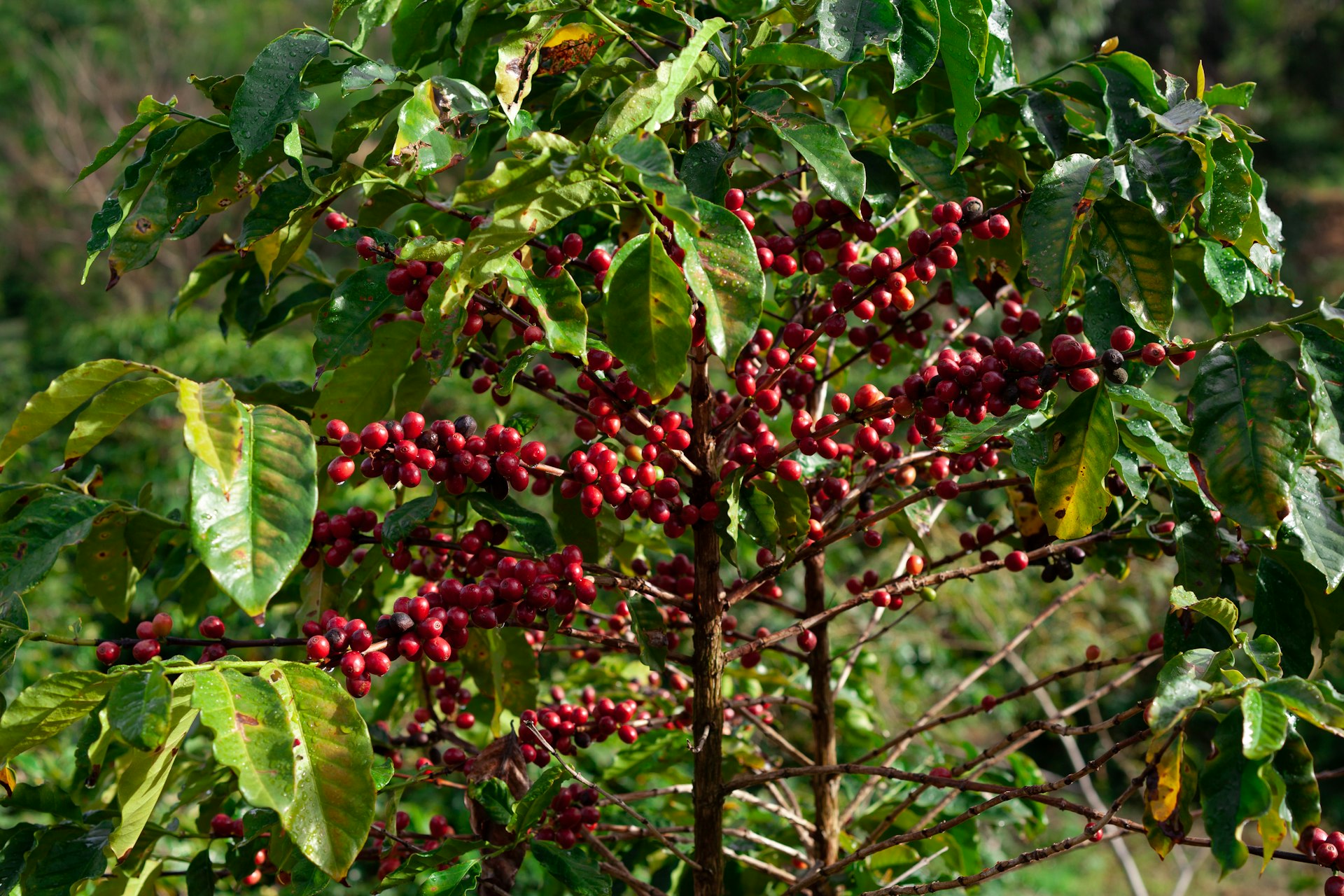
Bourbon originated when Typica plants were introduced to the island of Réunion (formerly called Bourbon Island), where they mutated and developed new characteristics. From there, Bourbon spread to Africa and Latin America, becoming highly influential in coffee farming.
Bourbon plants produce slightly higher yields while maintaining excellent cup quality. The beans are recognized for balanced sweetness, a smooth body, and caramel or fruit flavors. Because of these qualities, the
Despite these strengths, Bourbon faces challenges similar to those of Typica. This variety remains vulnerable to disease, and in the 20th century, coffee leaf rust outbreaks prompted many farmers to adopt new, more resilient varieties.
Bourbon is still widely cultivated today for its excellent flavor and historical significance. This variety has served as a key parent in the development of many other coffee varieties.
Gesha (Geisha) Coffee Variety
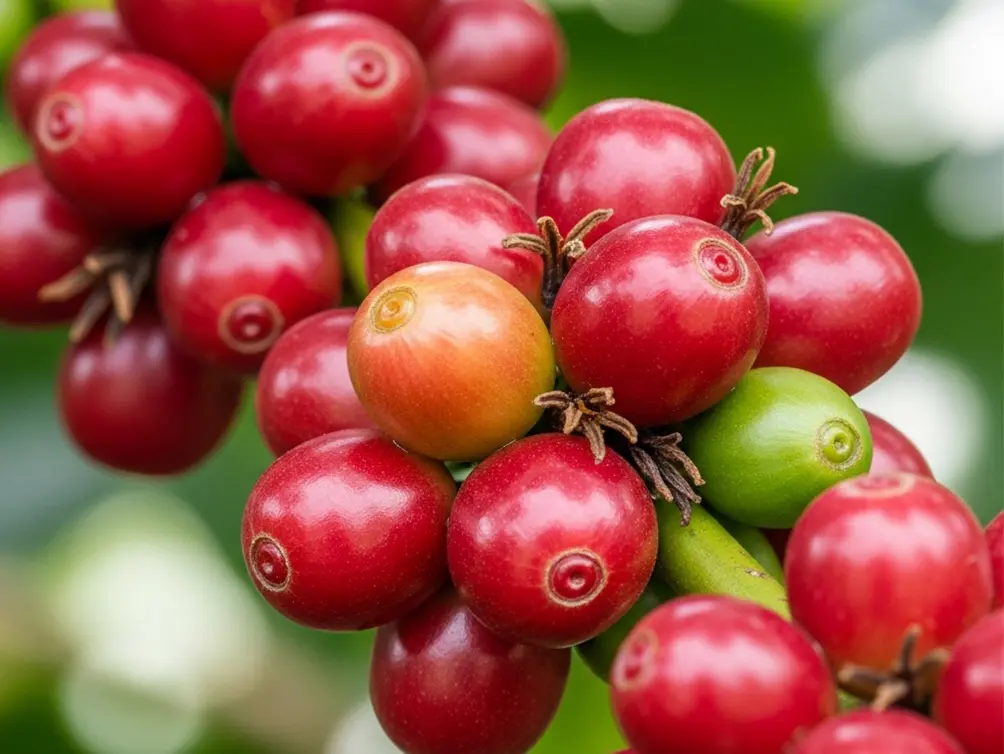
Few coffee varieties have captured global attention to the same extent as Gesha, sometimes spelled Geisha.
The variety was first found in Ethiopia's Gesha region. It spread through research and farming programs before becoming famous in Panama. During the 2004 Best of Panama competition, Gesha impressed judges with its intensely floral cup profile, a quality rarely found in coffee.
Gesha coffee is known for rare qualities, such as an intense floral aroma, a tea-like body, bright citrus acidity, and notes of jasmine and bergamot. These qualities changed how many consumers and coffee experts think about what makes coffee special.
Before Geisha gained global attention in the early 2000s, many buyers believed that coffee flavor was determined solely by origin. This variety showed that genetics can strongly influence how coffee tastes, prompting industry professionals to pay closer attention to plant varieties.
However, Gesha cultivation presents significant challenges. The plants produce relatively low yields and require ideal growing conditions to achieve their full flavor potential.
For farmers, planting Geisha is risky but rewarding. When conditions are right, the variety produces extraordinary coffees, but cultivation remains costly and risky.
SL28 and SL34 Coffee Varieties
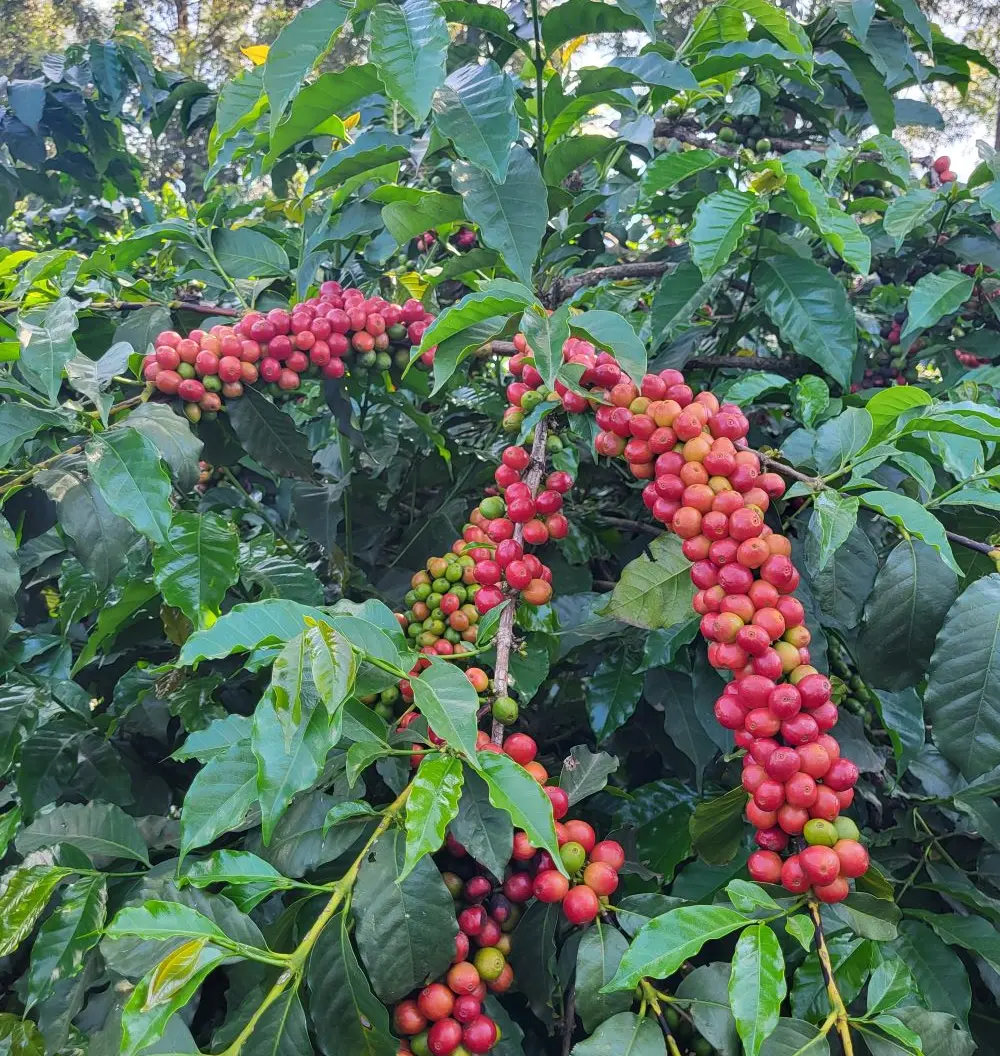
Two of the most famous African coffee varieties, SL28 and SL34, are closely linked to the vibrant flavor profile and have shaped the flavor identity of Kenyan specialty coffee.
Around the 1930s, researchers at Scott Agricultural Laboratories (SL) in Kenya selected these varieties. Their aim was to improve coffee productivity and drought tolerance.
SL28
SL28 handles drought well, which is why it’s still widely grown in Kenya’s highlands. However, like many traditional Arabica varieties, it is still vulnerable to diseases such as coffee leaf rust.
Coffee from SL28 plants often has:
- Bright, complex acidity
- Intense fruit notes such as blackcurrant and citrus
- Juicy body and layered sweetness
SL34
SL34 is derived from French Mission Bourbon varieties introduced to East Africa. It has many of the same flavor notes as SL28, but usually gives a fuller body and stronger sweetness.
SL34 plants generally perform well in high rainfall regions and fertile soils, making them well-suited to many Kenyan growing areas.
Modern Hybrid Varieties
Today, coffee farming faces greater uncertainty due to climate change. Higher temperatures, unpredictable rainfall, and increased pests and diseases have made it harder for traditional coffee varieties to thrive. Many of the highest-quality varieties are also the most sensitive to these issues. As a result, breeding programs worldwide are developing new hybrid varieties.
These hybrids combine genetics from different coffee types to produce plants that better withstand disease and changing climates. Examples include hybrids such as Ruiru 11 and Batian to resist coffee leaf rust and coffee berry disease. These may not always taste as good as traditional types, but they offer farmers a measure of protection against catastrophic crop loss.
Ruiru 11
The Coffee Research Foundation of Kenya released Ruiru 11 in 1985. They bred it by combining several parent lines, including traditional varieties such as SL28 and SL34, and introduced disease-resistant genes from other coffee varieties.
The goal was to create a compact, high-yield plant that could resist major diseases.
Key characteristics of Ruiru 11 include:
- Resistance to coffee berry disease and leaf rust
- Compact plant size suitable for dense planting
- Earlier maturation compared to traditional varieties.
Batian
Researchers released Batian, a newer Kenyan cultivar, in 2010. They developed it to combine disease resistance with improved cup quality, addressing problems found in earlier hybrids.
Batian plants:
- Show resistance to major diseases.
- Produce high yields
- Mature more quickly than traditional varieties.
- Maintain strong cup quality when grown well.
Farmers now regard Batian as an important variety for the future of Kenyan coffee farming, thanks to these traits.
These hybrid cultivars demonstrate how coffee breeding programs continue to evolve to balance flavor, productivity, and resilience as the climate changes.
Learn more: Kenyan coffee flavor profile
How Coffee Varieties Influence Flavor
Different varieties influence how sugars develop in the coffee cherry, how acids form during maturation, and how aromatic compounds emerge during roasting.
So, two coffees from the same country can taste completely different if they are from different varieties. Some varieties are known for bright acidity and fruity flavors. Others have a heavier body and chocolate-like sweetness. These genetic differences help create the wide range of flavors found in coffees around the world.
When specialty coffee professionals evaluate coffee, they consider not only origin and processing method but also the variety of the coffee plant itself.
Understanding these distinctions helps both producers and consumers better appreciate the complexity of coffee.
Why Coffee Varieties Matter for Producers
People usually focus on flavor, but the type of coffee variety also plays a big role in a farm’s economic success.
Farmers have to choose which coffee varieties to plant long before they see any harvest, since coffee trees take years to mature. Each variety has its own mix of qualities, like how much it produces, how well it resists disease, how it handles the local climate, and how much buyers want it.
A coffee variety with great flavor but low yields might sell for more, but it can also put farmers at greater financial risk. In contrast, a variety that produces more beans can offer more stability, even if the flavor is less unique.
These choices shape how farms change and how the coffee supply chain grows over the years.
When choosing a coffee variety, farmers usually have to weigh several important factors:
- Flavor potential
- Yield and productivity
- Resistance to pests and disease
- Suitability for local climate conditions
The Future of Coffee Varieties
The global coffee sector continues to evolve as new varieties emerge.
Researchers are working to preserve coffee's genetic diversity while also developing cultivars that can survive changing environmental conditions. At the same time, specialty coffee drinkers want to know more about where their coffee comes from and how it's grown. This curiosity has led people to pay closer attention to coffee varieties and how they affect flavor.
Unlike origin or roast level, coffee varieties are not always prominently displayed on packaging.
As more people learn about plant genetics, they begin to see coffee not just as a beverage but as a farming product shaped by nature and human creativity. Specialty roasters and producers are including variety information alongside origin and processing method. This shift reflects a broader trend toward transparency in specialty coffee sourcing.
Every bag of coffee has a story, not just of place and process, but also of the plant's genetics that shape its flavor.
For coffee farmers, choosing the right variety involves balancing quality, resilience, and economic sustainability. For consumers, understanding coffee varieties deepens appreciation for the craft behind each cup.
Discover Coffee With Greater Traceability
At Solai Coffee, understanding origin means more than just knowing the location.
Our farm direct sourcing approach allows us to work closely with farmers and understand the environmental and farming factors that shape each coffee.
From specialty green coffee to carefully roasted batches and microlots, every coffee showcases a blend of variety, terroir, and the farmer's skill.