
Green coffee grading is one of the most critical steps in determining the quality, market value, and final cup experience of a coffee. After harvesting, processing, and drying, beans are milled and evaluated before they can enter the market.
Specialty Coffee Association (SCA) provides widely respected standards that link physical defects to cup quality, helping buyers, roasters, and consumers understand the value and flavor potential of a coffee lot. This guide explains how Kenyan green coffee beans are graded and what that means for cup quality. After reading this, you will understand how grading impacts price, roasting, and flavor.
What Is Green Coffee Grading?
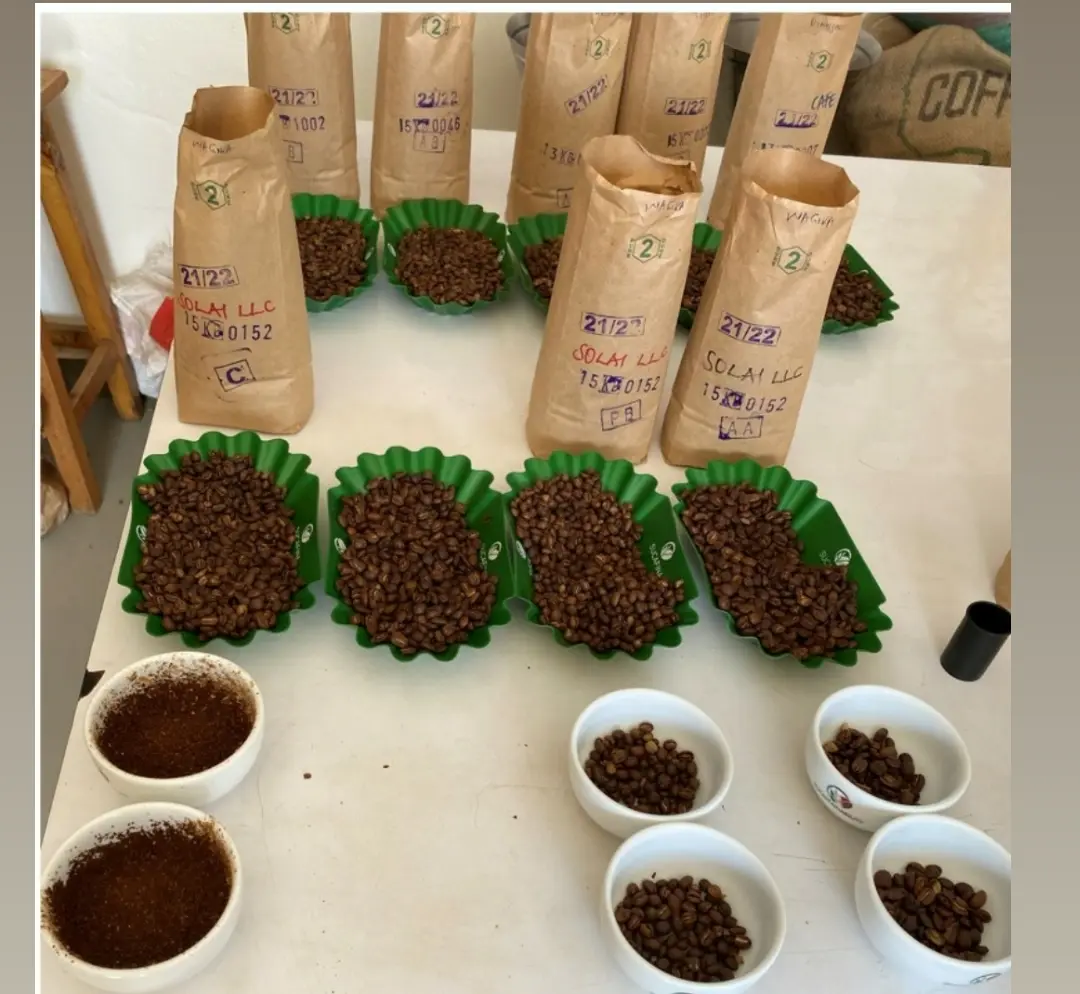
Grading green coffee is a process that evaluates both physical and sensory qualities of the beans. It ensures uniformity, consistent roasting performance, and cup quality.
The grading process typically includes:
• Bean size: Larger, denser beans are generally associated with higher quality.
• Bean shape and uniformity: Well-formed beans roast evenly and yield consistent flavor.
• Defect counts: Defects such as black beans, sour beans, or insect damage are counted in standardized samples.
• Moisture content: Ideal moisture levels (around 9–12%) prevent mold and preserve flavor.
• Density: Heavier beans often indicate a richer, more complex cup.
• Color and appearance: Even coloring signals proper processing and drying.
• Cup quality (sensory evaluation): Specialty coffee standards often require a score of ≥80 points under SCA cupping protocols.
Specialty-grade coffee must meet strict standards, including zero primary defects and a cup score of ≥80 points on the SCA scale. Grading ensures that beans roast evenly and deliver the expected flavors.
The combination of these factors determines whether a coffee lot qualifies as specialty, premium, commercial, or below standard.
If you're a roaster looking for traceable, AA and AB Kenyan lots with high cupping scores, request a sample from Solai Coffee
How Is Coffee Grading Done?
Before green coffee reaches the market or a roaster’s hands, it must undergo a meticulous grading process to assess quality, consistency, and cup potential. This process evaluates both physical characteristics—such as bean size, shape, density, color, moisture, defects, and sensory qualities assessed through cupping. By systematically analyzing each lot, graders can classify the coffee into appropriate grades, ensuring that roasters receive beans that roast evenly and deliver the expected flavor profile. The step-by-step process below summarizes how green coffee evaluation is conducted from sampling to final grade assignment.
Step-by-Step |
Description |
Sampling |
A representative 300–500g sample is taken from the coffee lot. |
| Screening by Size | Beans are passed through calibrated screens (#14–18) to sort by size and ensure uniform roasting performance. |
| Defect Counting | Primary and secondary defects are counted. Primary defects include black, sour, insect-damaged, or broken beans that affect cup quality. |
| Moisture Testing | Moisture meters and float tests confirm proper drying, usually targeting 9–12% moisture. |
| Density Evaluation | Higher-density beans are preferred, as they indicate better farming conditions and richer flavor potential. |
| Cupping | Certified graders assess aroma, body, acidity, sweetness, aftertaste, and flavor clarity according to SCA protocols. |
| Grade Assignment | The lot is officially classified and priced based on physical evaluation and cupping results. |
What Is the Grading System for Coffee in Kenya?
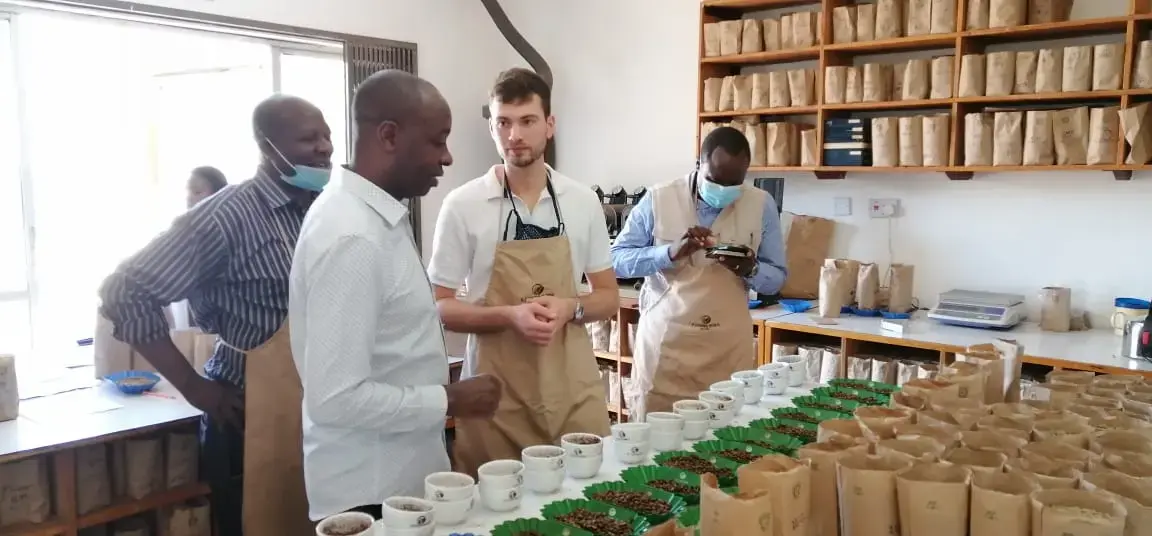
In Kenya, the coffee grading system is both legally mandated and internationally respected. Green bean coffee is primarily classified by bean size, though physical defects and quality also influence market perception. The primary grades include:
Grade |
Screen Size |
Description |
AA |
17/18 (7.2 mm+) | Largest, densest premium beans; prized for bright acidity and complex flavor. |
AB |
15/16 (6.8 mm+) | Slightly smaller than AA; It combines both A and B beans and accounts for around 40% of the top-quality export grade |
PB (Peaberry) |
17 | Single, rounded beans naturally occurring in the cherry; dense and concentrated in flavor, making up around 5% of the crop. |
E (Elephant Bean) |
20+ | Rare oversized beans formed from fused seeds; strong body and unique profile. Their impressive size gives a deeply rich, full-bodied cup. |
C |
12–14 | Thinner smaller beans sorted out from AB during screening. |
TT |
By density separation | High-density smaller/ broken beans collected after dry milling separation. |
T |
Broken or small fragments | Used in commercial blends. |
MH/ML |
M'buni (Natural dried) | Lower-grade, natural-processed beans, often from fallen cherries. |
UG |
Ungraded | Lowest category, broad quality range, mostly commercial use. |
Kenya's grading policy does not base official grades on defect counts. However, exporters and roasters still evaluate defects and cup quality to ensure specialty standards are met. Licensed graders inspect each lot for bean size, defects, moisture, color, and cup profile, aligning local practices with international specialty coffee protocols.
You may also like: Microlot Coffee: What Makes It Truly Special
The Four Levels of Coffee Quality
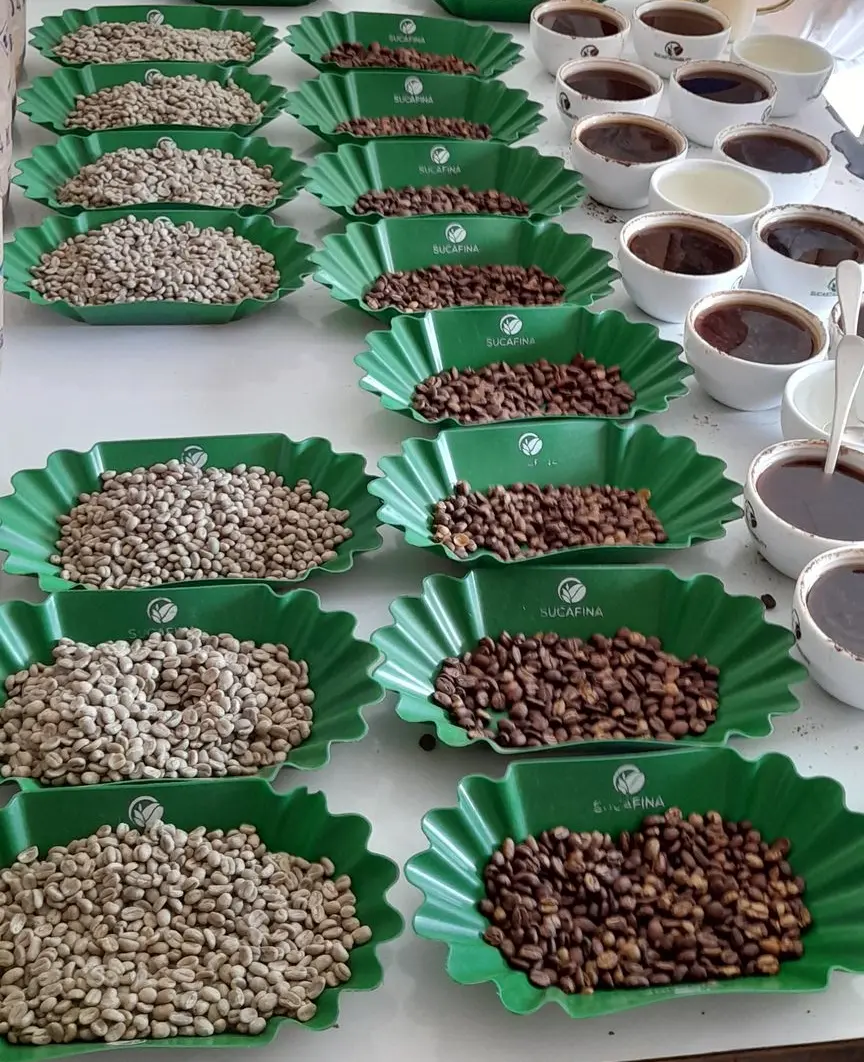
The SCA cupping system categorizes coffee based on defects, size, and cup attributes in a 300g sample:
• Specialty Coffee (Grade 1) : Scoring ≥80 points on SCA cupping charts, free from primary defects, offering distinct flavor attributes.
• Premium/Exchange Coffee (Grade 2): High-quality coffee with minor defects, typically scoring 75–79 points.
• Commercial/Standard Coffee (Grade 3) : Contains more defects and variable cup quality, usually scoring below 75 points.
• Off-Grade or Substandard (Grade 4-5) : Large numbers of defects, inconsistent flavor, unsuitable for most commercial or specialty markets.
Green coffee is graded by evaluating bean size, shape, defects, moisture content, density, color, and cup quality. Specialty coffee often requires a score of≥80 points on the SCA cupping scale.
Kenya Arabica top grades (AA, AB, PB) almost always fall into the specialty coffee category, explaining the global demand for Kenyan Arabica and its reputation for sweetness, brightness, and complexity.
Solai Coffee's Approach to Green Coffee Grading
At Solai Coffee, we follow both Kenya's grading laws and international specialty standards. Our smallholder farmers in Solai/Nakuru harvest ripe cherries, carefully process and dry them, and hand-sort beans for AA, AB, and Peaberry lots. We ensure:
• Optimal moisture (10–12%)
• Minimal defects
• High cup quality with distinct flavor profiles
This approach maximizes value for farmers, guarantees premium quality for roasters, and maintains Kenya's reputation for exceptional Arabica coffee.
How Green Coffee Is Graded – Kenya Arabica Coffee