
Global Coffee Market Overview
The global demand for coffee continues to rise, driven by expanding coffee cultures, urban lifestyles, and a growing appreciation for specialty brews. According to the International Coffee Organization (ICO), global coffee production is projected to reach 170.83 million bags in the 2025/2026 coffee year, marking a steady increase from previous years in both production and consumption.
Kenya’s Role in the Global Coffee Market
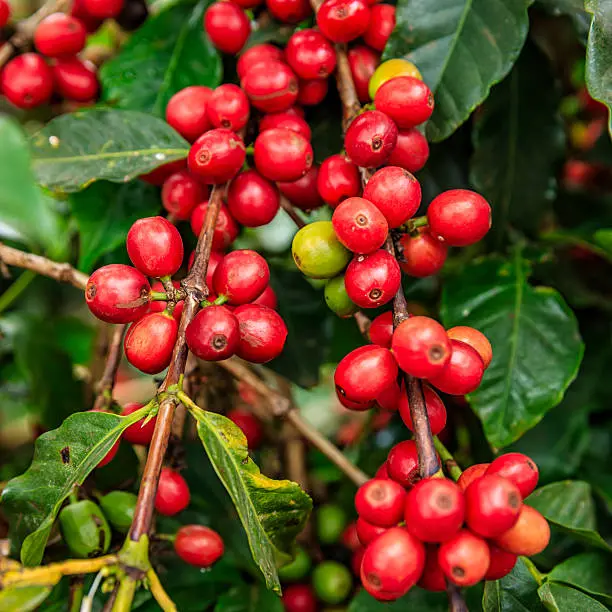
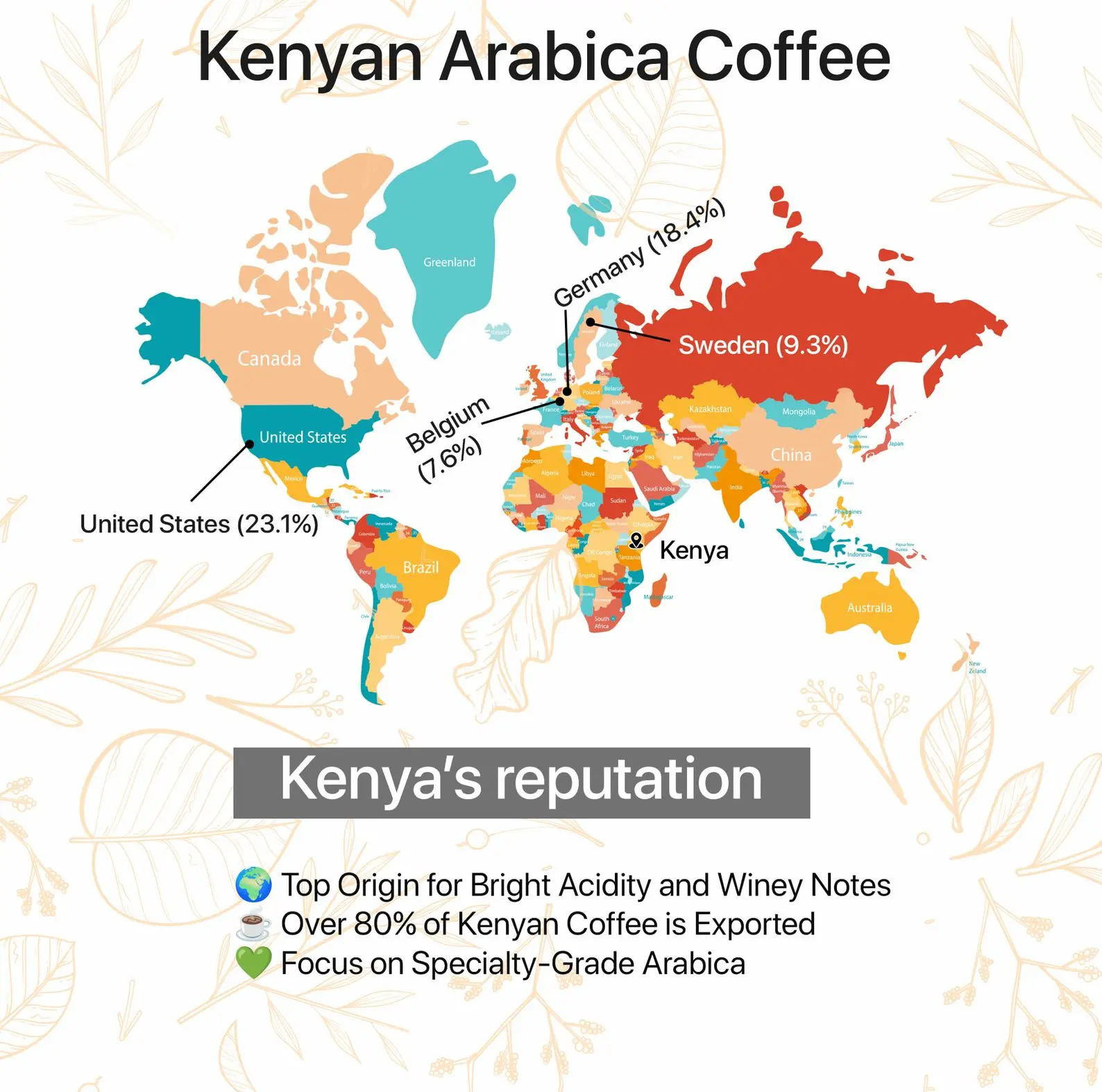
Kenya Arabica coffee has earned a premium spot in the global market, particularly in the U.S., where the specialty coffee boom and origin-savvy consumers have made it the top export market. Historical data show a steady rise in U.S. imports and market share, and forecasts (USDA, ICO) anticipate further growth in Kenyan production and exports as farmers scale up to meet demand.
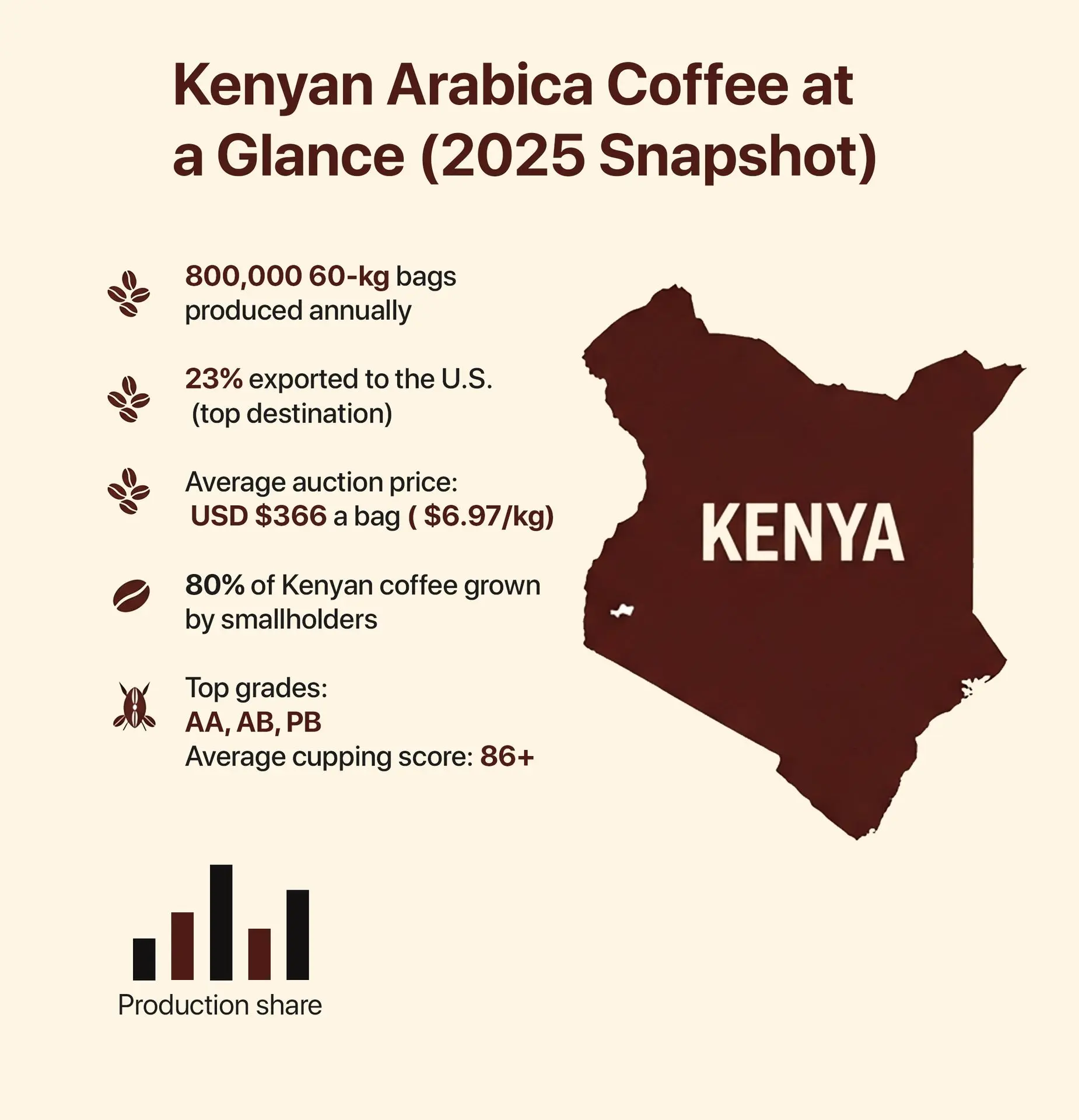
This growing recognition stems from Kenya’s deliberate focus on quality over quantity, with smallholder farmers in high-altitude regions producing top grades such as AA, AB, and Peaberry that consistently earn high cupping scores and command premium prices on the international market.
Read More: Kenya’s Coffee Journey: From Colonial Roots to Modern Challenges
Liwani Estate: Award-Winning Excellence in Sustainable Coffee Farming
At Solai Coffee, we proudly source much of our coffee from Liwani Estate, a family-run farm redefining sustainable excellence in Kenyan coffee
One of the farms we source most of our coffee from is Liwani Estate, a shining example of what dedication, innovation, and sustainability can achieve in Kenyan coffee production.
In October 2025, Liwani Farm, led by Stephen and Margaret Kuria, fondly known as Dad and Mom, was honored with the Highest Coffee Production Award by the New Kenya Planters Cooperative Union (NKPCU).
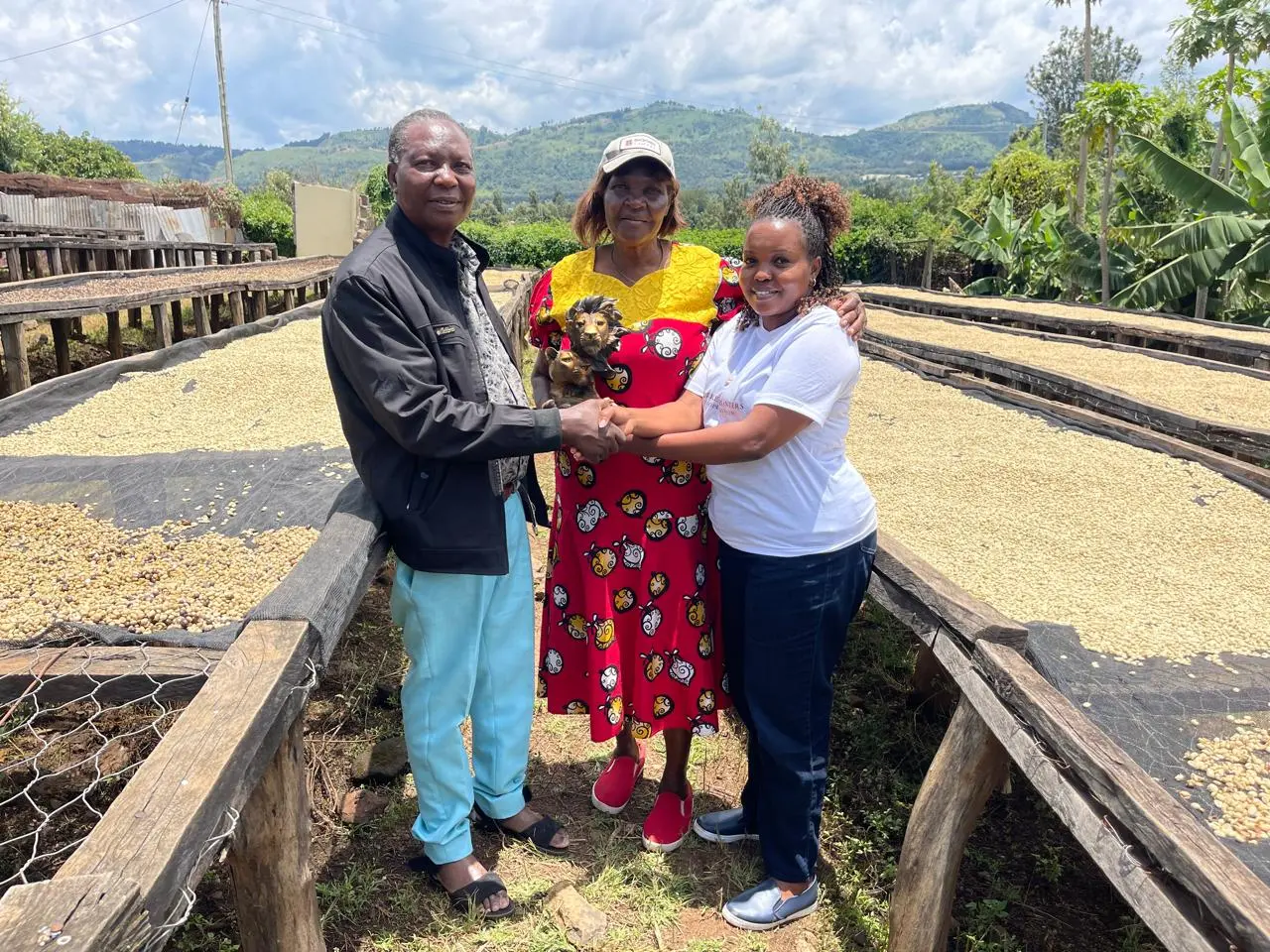
This recognition goes far beyond yield. The NKPCU evaluates farms based on sustainable farming practices, soil and water conservation, innovative processing methods, quality consistency, environmental stewardship, and measurable community impact.
Commitment to herbicide-free cultivation and eco-conscious farming methods continues to set the benchmark for specialty coffee in Kenya.
To learn more about the farmers behind our coffee, visit our Meet Our Farmers page.
Growth and Consumer Trends
Rapid Growth in Imports
Over the past five years, imports of Kenyan coffee into the U.S. have surged, making the country one of Kenya’s most important trading partners. USDA data show imports tripling within two years (6,512 metric tons in 2021, 8,870 tons in 2022, and 12,232 tons in 2023) reflecting the rising demand for high-quality Arabica beans. Roasters and retailers increasingly feature Kenyan AA and AB beans as premium, single-origin offerings, aligning with the growing consumer interest in origin and quality. The U.S. now accounts for more than 20% of Kenya’s coffee exports, positioning itself as the leading buyer by volume.
Related reads: Why Today's Coffee Consumer Now Values Transparency and Ethics.
Supply Volatility and Climate Challenges
Despite impressive growth, coffee farmers face challenges from climate change, yield instability, and rising production costs. Many farmers contend with aging trees and small landholdings that limit output. However, collective innovation and sustainability-focused programs continue to provide hope. Initiatives in soil management, reforestation, and water conservation continue to strengthen resilience while maintaining the high standards expected in the specialty coffee market.
Rising Demand for Specialty and Ethical Coffee
The third-wave coffee movement is transforming how Americans consume and value coffee. Millennials and Gen Z consumers increasingly prioritize transparency, sustainability, and traceable sourcing. Industry data show that nearly half of U.S. coffee drinkers now prefer specialty or origin-branded brews, as they seek to understand where their coffee comes from, who grew it, and how it supports farming communities.
This shift has fueled growing demand for ethically produced Kenyan Arabica, celebrated not only for its bright, complex flavor but also for the care and sustainable practices behind each harvest.
Recent surveys highlight a strong consumer pivot toward premium beverages: in 2025, adults reported drinking specialty coffee daily (46%) than traditional brewed coffee (42%) — a clear signal of changing preferences. Espresso-based drinks, cold brews, and pour-over methods continue to rise in popularity, especially when made from high-grade, single-origin beans. Importantly, consumers now associate origin with both superior taste and ethical value, further boosting Kenya’s reputation in the specialty market.
Economic Impact and Export Insights
Kenya’s coffee industry remains a vital pillar of its economy, with over 80% of production exported—most prominently to the U.S. Rising demand for specialty-grade Arabica has strengthened export earnings and improved livelihoods for smallholder farmers.
While Solai Coffee operates on a direct trade model, bypassing traditional auctions to work hand-in-hand with farmers, the Nairobi Coffee Exchange (NCE) still provides a valuable benchmark for understanding national price trends.
Premium grades like AA continue to command strong values, averaging around $454 per 50 kg bag (≈ $9.08 per kg or ~$20.70 per pound) in the 2025/26 season—up from roughly $351 per bag in 2024. Even as auction volumes decline, average prices are rising from $6.37/kg to $6.97/kg, underscoring the growing global appreciation for Kenyan quality.
Kenyan Arabica is among the most expensive coffees in the U.S. market, and recent price trends have only strengthened that premium. Roasted AA and AB coffees retail at $18–$25 per pound, reflecting consumer willingness to pay for exclusivity and quality.
Through direct trade model, Solai Coffee channels more of each coffee dollar back to the farmers who grow it. The result is a system that fuels economic growth, encourages sustainable farming, and builds lasting resilience across coffee-growing communities.
Kenyan Arabica coffee stands at the heart of a global movement toward quality, ethics, and sustainability. With the U.S. emerging as its leading market, the path forward depends on collaboration, transparency, and continued excellence from farm to cup.
Explore more from Solai Coffee – Shop Kenyan Arabica Coffee