
Quick Overview
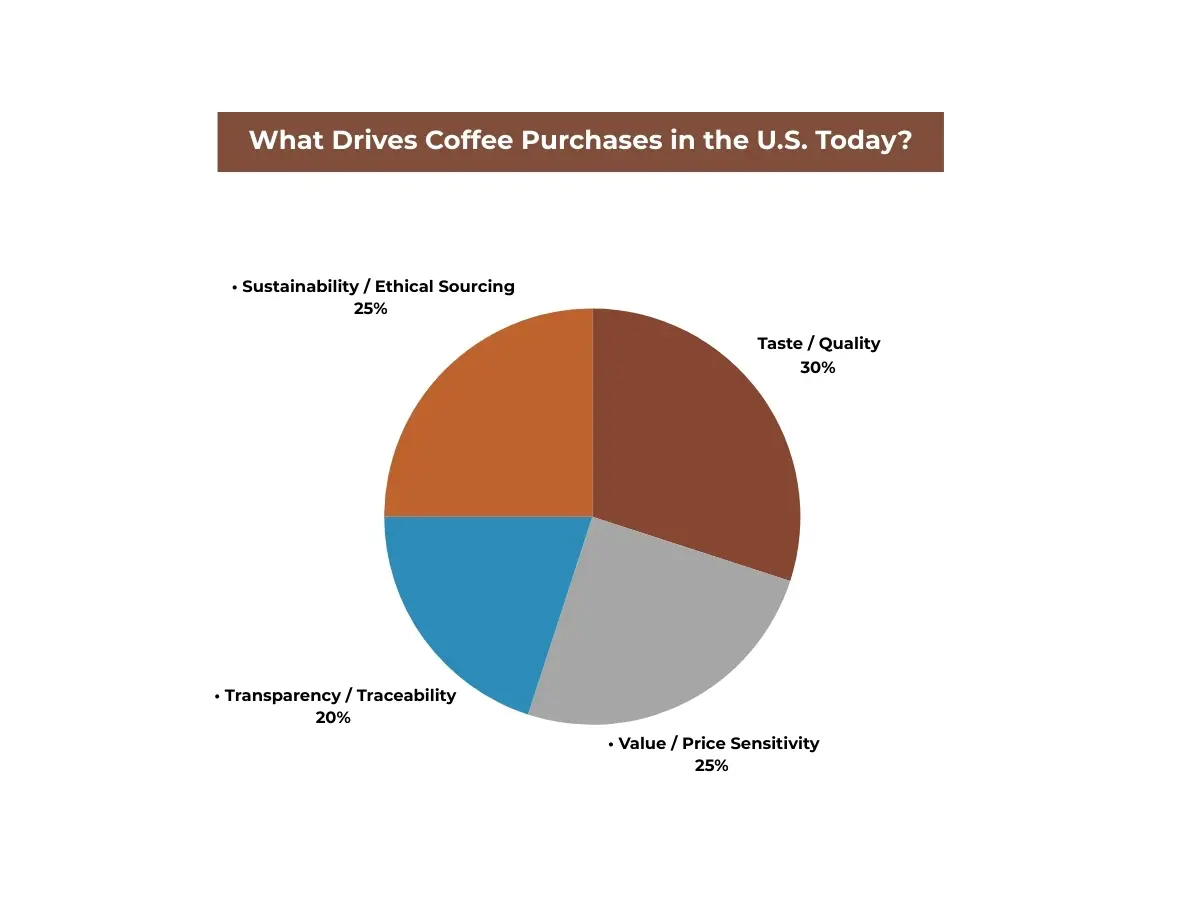
For years, the U.S. coffee industry has revolved around one selling point: quality. But today, taste and aroma are only part of the story. Consumers and businesses alike want value, transparency, and ethical sourcing. This shift is reshaping the market for green coffee beans, roasters, and retailers. Companies like Solai Coffee are meeting these demands by offering farm-direct coffee sourcing, giving consumers confidence in both quality and the story behind their cup.
The Shift in U.S. Coffee Market Priorities
American coffee drinkers still love great taste – According to The National Coffee Data Trends (NCDT specialty coffee consumption reached a 13-year high in 2025 (45% of U.S. adults drank specialty coffee). Still, quality is no longer the only selling point. Consumer values have changed the game for coffee, from sustainability to wellness, and companies are meeting customers' demands for innovation and transparency. This shift in the coffee market means buyers weigh value, traceability, sustainability, and ethics alongside flavor.
Value and Price Sensitivity
Inflation and rising bean prices have made affordability a priority. More Americans are brewing coffee at home, choosing store brands, or exploring concentrated coffee options to save money while still enjoying great flavor.
Recent U.S. survey data show 81% of coffee drinkers had coffee at home yesterday, versus just 36% out-of-home. Among them, 55% say higher prices pushed them away from cafés, with 70% now brewing at home instead. Store brands have surged – U.S. retail data show private-label coffee sales climbing ~25% per year as price‑conscious shoppers seek cheaper blends.
Affordability and convenience now rank high. Retailers and roasters are responding with value tiers and bulk/house-brand options.
Sustainability and Ethical Sourcing
Sustainability has become non-negotiable. Consumers actively seek coffee grown without harming the planet and sourced under fair labor conditions. Long-term consumer loyalty now hinges on "people and planet" credentials.
Coffee consumers now say "ethical, environmentally friendly, or socially responsible" options build trust and thus influence their purchasing decisions. They expect brands to reduce deforestation and carbon footprints, and many are willing to pay a premium for products verified as ethical and sustainable.
Choosing Kenya green coffee beans through farm-direct coffee sourcing supports farmers, ensures fair pay, and reduces the environmental footprint of the supply chain.
These evolving expectations are reshaping how coffee is produced and sold.
Transparency and Traceability
Modern consumers want to trace their cup to the source—whether it's a family farm in Kenya or a cooperative in Latin America. Many swear they would pay more for products sourced responsibly. QR codes, farm-of-origin details, and certifications are becoming standard. Brands that fail to share this information risk losing trust, while those like Solai Coffee, which prioritize transparency, earn loyalty.
Read also: Exploring Solai Coffee Supply Chain
Implications for Producers, Retailers, and Roasters
The shift in consumer values is rippling through the supply chain:
Producers
Coffee farmers who invest in sustainable practices (shade farming, organic inputs, climate‑resilient varieties) and certifications can command higher prices and access new markets. Fairtrade-certified beans, for example, can fetch about 35% more in price per pound compared to conventional coffee. Those who adapt – embracing agroforestry, stable direct trade relationships, and clear trace links – are rewarded with loyal buyers and more predictable income.
Retailers and Shops
Merchants gain an edge by highlighting transparency and values. Certifications and origin stories resonate with conscious consumers, while value-conscious buyers expect fair pricing or loyalty rewards. Successful retailers strike a balance by offering tiered products (premium single-origin and budget blends) while clearly communicating their sourcing commitments.
Roasters and Importers
Roasters must balance quality with social and environmental credentials. Specialty coffee remains strong, now accounting for nearly 60% of U.S. consumption. To maintain trust, many roasters commit to direct trade programs, adopt sustainable practices such as carbon-neutral roasting and compostable packaging, and share the authentic story of their beans. Those who cling to "quality alone" risk falling behind as consumers invest in value-aligned brands.
In summary, U.S. coffee consumers today sip on more than just flavor. Beyond bean quality, they demand value deals, full transparency, and sustainable, fair sourcing.
Coffee businesses that recognize and adapt to these priorities – by offering affordable options, telling the origin story, and upholding ethical practices – will thrive in this new era. Those who cling to "quality alone" may find themselves out of touch as consumers put their money into value-aligned brands.
The message is clear: quality alone no longer defines premium coffee, and at Solai Coffee, we believe in purpose.
Shifting Priorities in the U.S. Coffee Market: Why Today's Coffee Consumer Now Values Transparency and Ethics.