
Ever noticed your coffee puffing up and bubbling when you first pour hot water? That’s called coffee blooming, and it holds the secret to unlocking the full flavor of your brew.
Let’s explore why that 30-second pause could make or break your morning cup.
What Is Coffee Blooming?
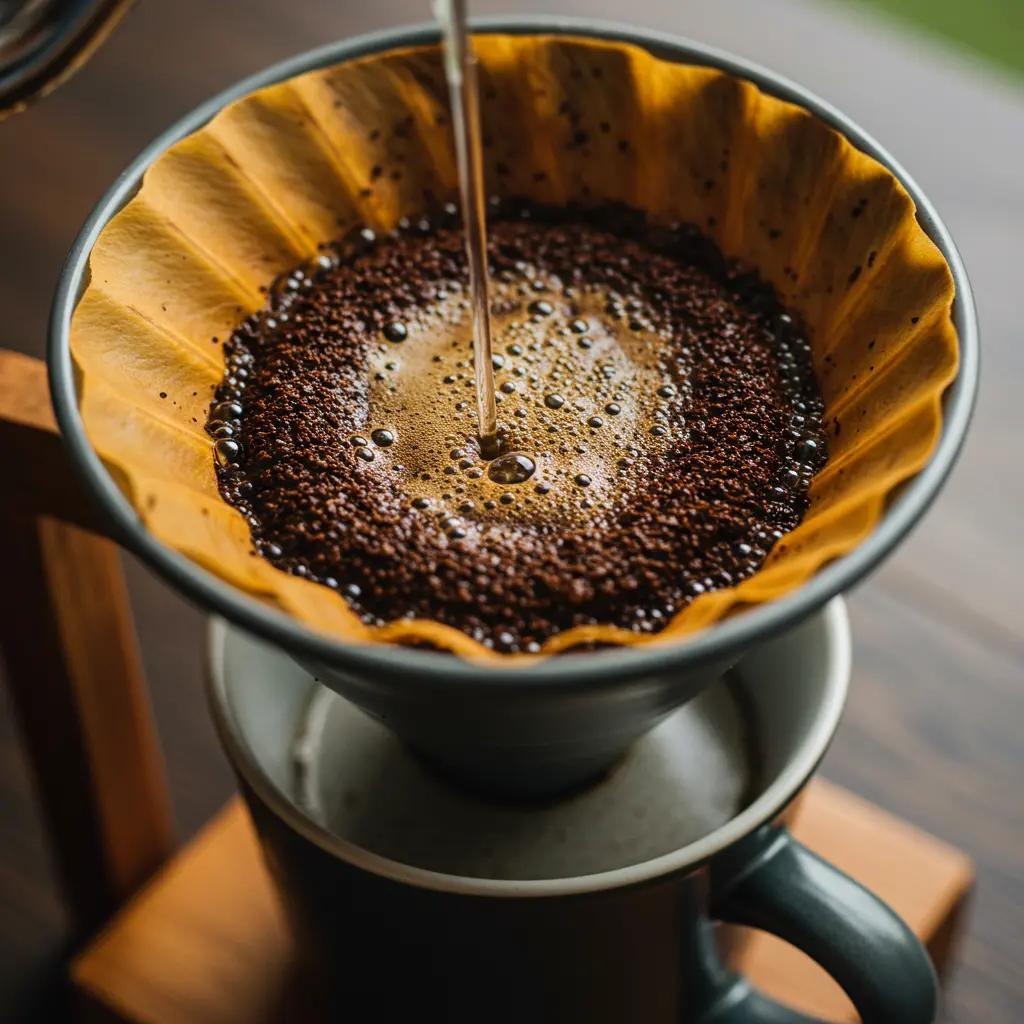
Coffee blooming is the first burst of bubbles and foam that occurs when hot water first hits fresh coffee grounds. In other words, the coffee grounds are exhaling trapped carbon dioxide (CO₂) as they get wet. You’ll often see a layer of foam forming on top of the coffee bed during a pour-over or French press as the bloom happens.
A proper bloom is an easy way to unlock richer aroma and a more balanced flavor in your cup.
Ready to experience a better bloom?
Explore our freshly roasted Solai Coffee beans for peak flavor and maximum bloom.
The Science of the Coffee Bloom
The bloom happens because roasting creates CO₂ inside the coffee bean. Roasting transforms green coffee into aromatic brown beans, and a by-product is carbon dioxide gas.
Right after roasting, beans are saturated with this CO₂, which slowly leaks out (that’s why fresh coffee bags have one-way degassing valves).
Freshly roasted coffee will off-gas the most CO₂ in the first couple of weeks after roasting. A process known as degassing.
When you grind the coffee, you increase the surface area and speed up the CO₂ release. Adding hot water accelerates this release, causing the grounds to puff up.
How Blooming Affects Flavor and Extraction
If you brew without a bloom, those trapped gases can interfere with extraction and leave a flat or sour note. By pouring a bit of water and waiting, you allow most of the CO₂ to escape first. Guides explain that with less trapped gas, “water can extract [solubles] more evenly,” avoiding dry pockets and uneven saturation. The result is a cup that’s balanced and full-bodied.
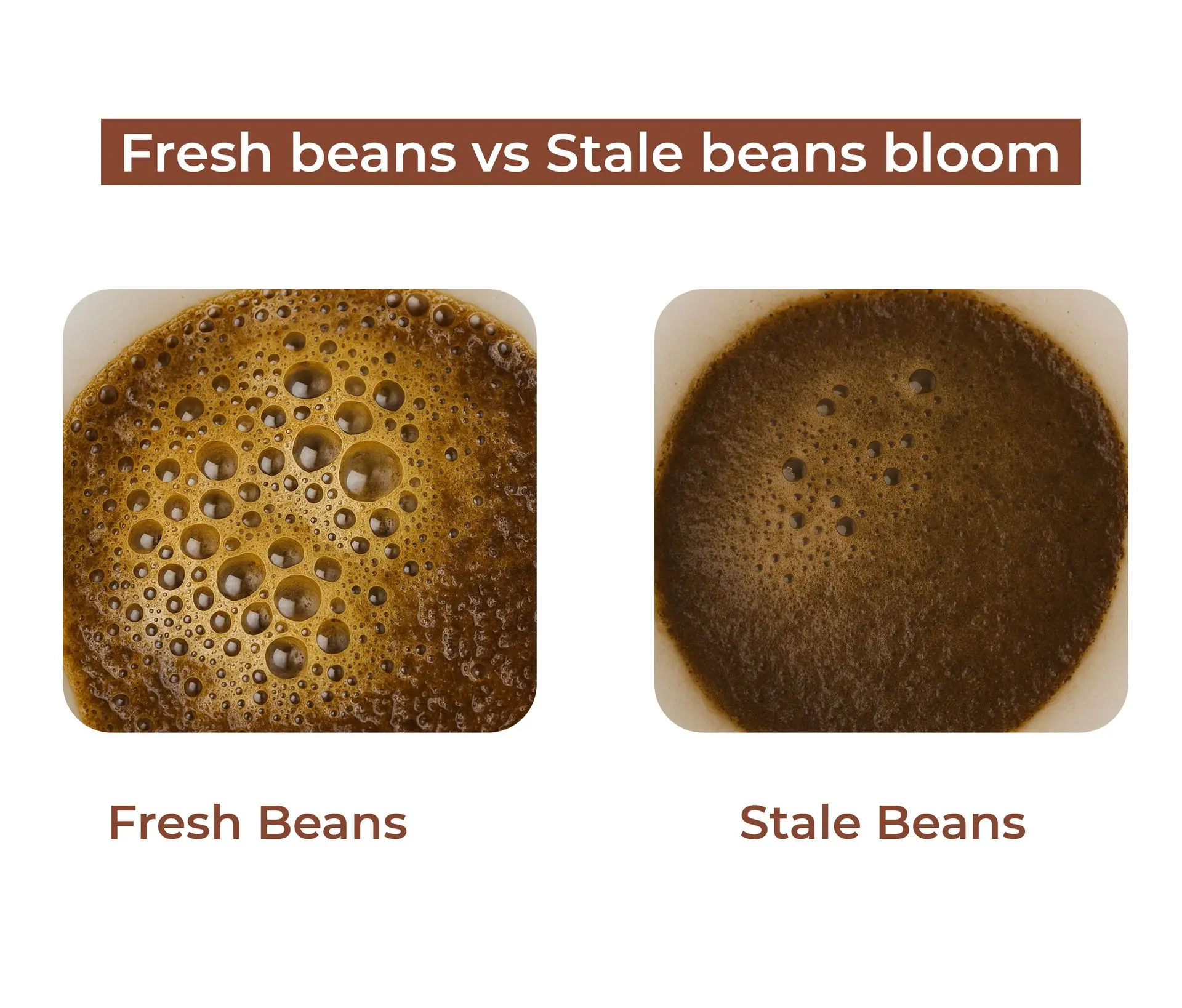
Many baristas even use the bloom as a freshness check: a big foamy bloom almost always signals fresh beans, whereas stale grounds tend to lie flat. So not only does blooming improve extraction, it also helps you ensure you’re working with vibrant, just-roasted coffee.
How and When to Bloom Coffee at Home
Blooming is easy and only adds a bit of time to your brew. You don’t need special equipment – just hot water and your favorite brew method. The basic idea is to pour a small amount of hot water over the grounds and wait before continuing.
A quick step-by-step for a classic pour-over or French press
Grind and measure
Use freshly roasted, medium-coarse coffee grounds. (Fresher is better – beans roasted within the last week will bloom the most.)
Initial pour
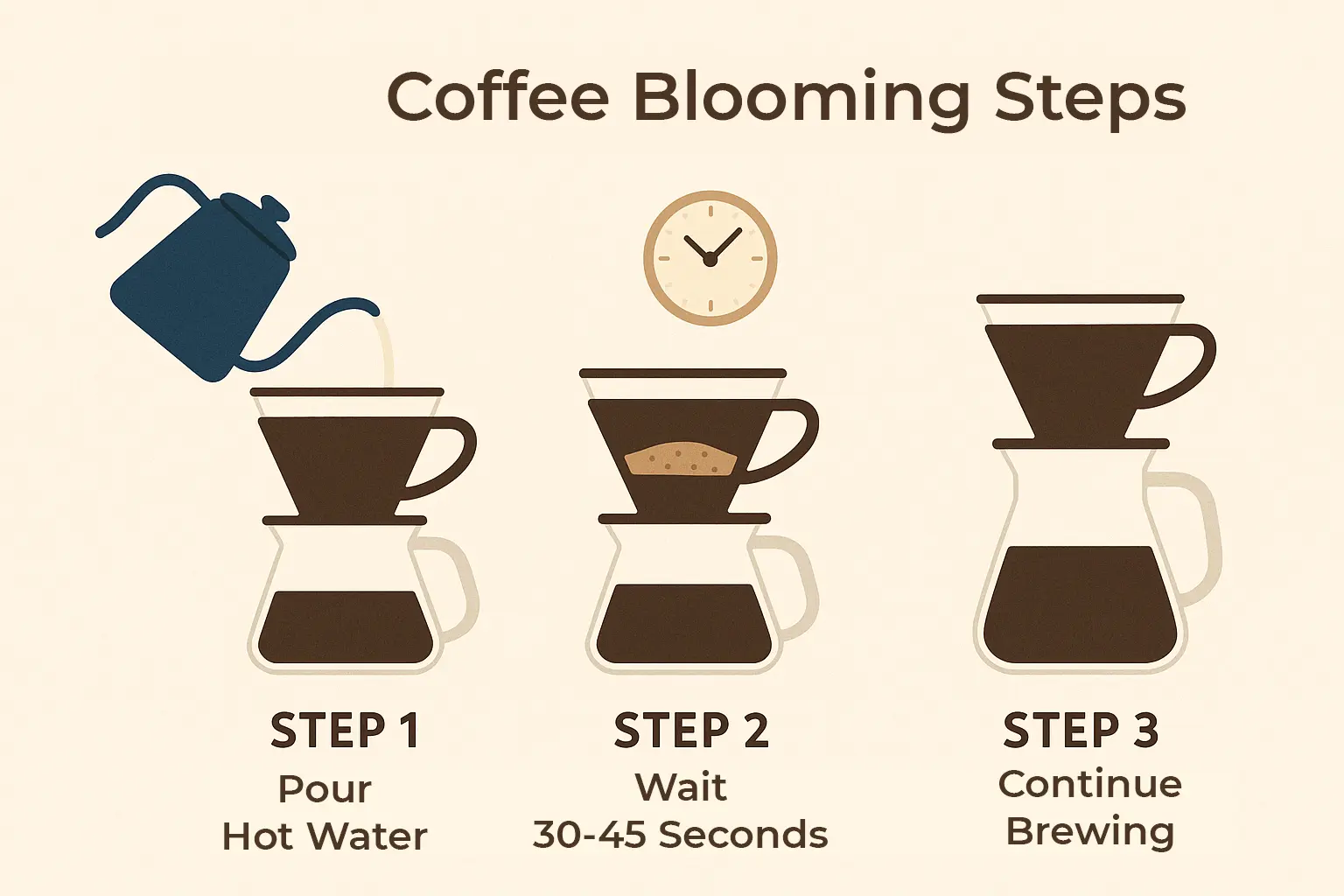
Pour hot water slowly to wet all the grounds. Aim for about 2× the weight of coffee in water. For example, if you have 20g of coffee, pour ~40g of water. The goal is to saturate the grounds evenly without brewing the full cup yet.
Wait (bloom)
Let the coffee sit for about 30–45 seconds. You should see a foamy bubbling on the surface as CO₂ escapes.
Continue brewing
After the bloom is over, pour the rest of the water (for pour-over) or press the plunger (for French press) and complete your brew. The coffee grounds are now free of most of their gas and will extract more uniformly.
A few extra tips!
Use water just off boil (around 195–205°F) for the bloom, and pour gently in a spiral or even pour to wet the coffee grounds fully.
High-pressure methods like espresso or pod machines are different. They brew so quickly that the trapped CO₂ contributes to the crema, and many machines use a built-in pre-infusion step (essentially an automatic bloom).
Bloom Times and Brewing Methods
The exact bloom time can vary by method and roast.
- Pour-Over: Bloom for about 30–45 seconds before continuing.
- French Press: Bloom ~30 seconds, then stir and fill up (2–3 tablespoons of water to bloom one tablespoon of coffee).
- AeroPress: Bloom 30 seconds with pre-soak, then press.
- Drip Coffee Maker: Many automatic drip brewers pre-wet the grounds (bloom) for 5–15 seconds to “wake them up” before complete brewing.
- Espresso Machine/Pod: Rely on built-in pre-infusion; you don’t typically set a separate bloom time.
The key is that bloom times of roughly half a minute are common. Pouring water too fast or too much can “over-bloom” and stall the brew.
If you notice your brew bed drying out or water pooling, you may have poured beyond the bloom. Otherwise, consider the bloom time a flexible tool: a vigorous 45-second bloom is ideal for very fresh beans, while a quick 20–30-second bloom may suffice for more aged grounds.
Bloom Your Way to the Perfect Cup
Coffee bloom is a simple but powerful technique for better flavor.
By letting your Coffee grounds “breathe” before the full brew, you ensure smoother extraction and tastier coffee.
So next time you brew, take an extra 30 seconds to pour, pause, and watch your coffee bloom. Your taste buds will thank you – and with Solai Coffee single-origin beans and brewing kits on hand, you will be well on your way to that perfect brew.